
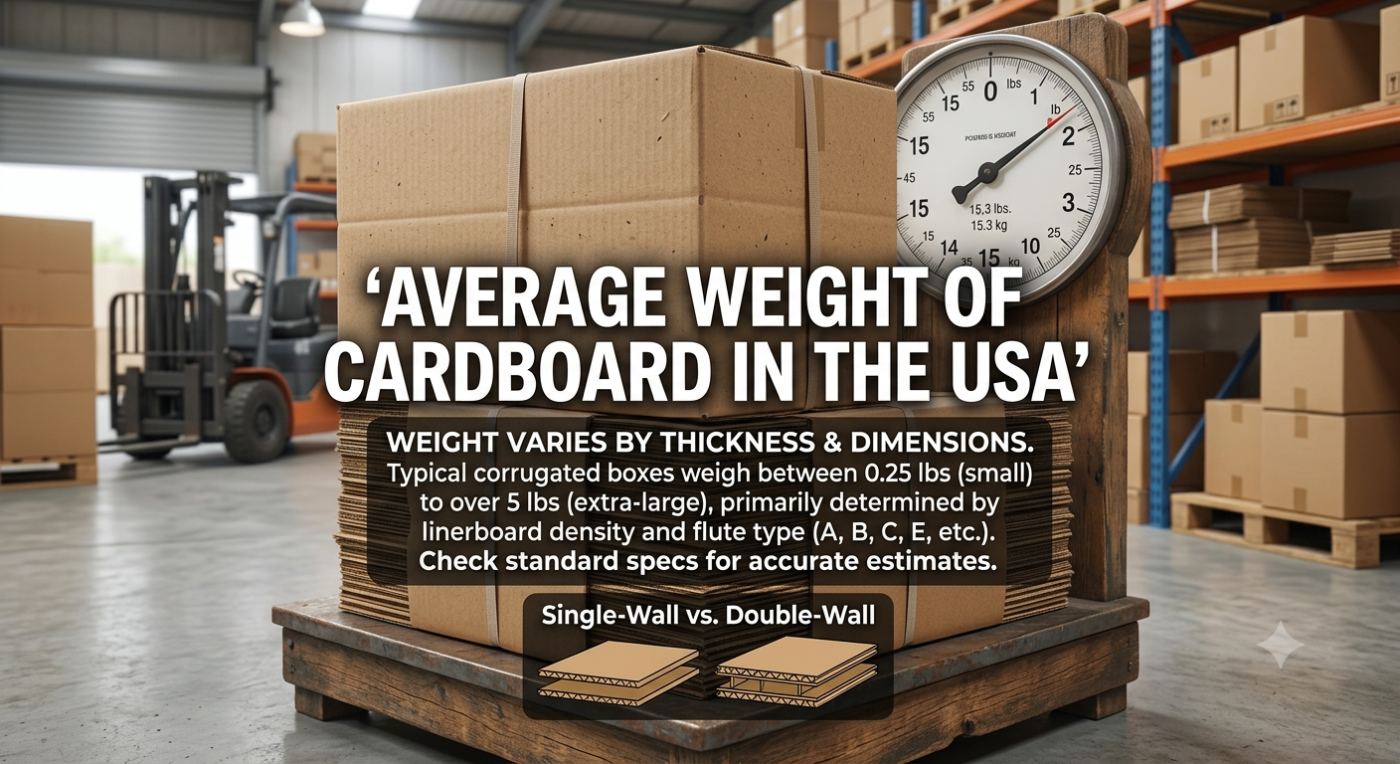
Cardboard is one of the most widely used packaging materials across the USA. Whether you’re shipping products, storing inventory, designing retail packaging, or planning custom product boxes, understanding how much does cardboard weigh can help you make better decisions. The weight of cardboard affects shipping costs, product protection, sustainability, and even the customer experience.
Businesses that work with premium packaging solutions often rely on experienced manufacturers like Packaging Aazz to create packaging that balances durability with lightweight performance. Selecting the right cardboard grade means you can protect your products without paying unnecessary shipping charges.
If you’ve ever wondered how much does cardboard weigh, the answer depends on several factors, including the cardboard type, thickness, density, moisture content, and box dimensions. There isn’t one universal weight because cardboard is manufactured in different grades for different industries.
This guide explains everything you need to know about cardboard weight, how to calculate it, and why it matters for shipping, storage, and custom packaging.
Why Cardboard Weight Matters
Many people only think about the dimensions of a box. Weight is equally important because it directly influences:
- Shipping costs
- Freight pricing
- Product safety
- Warehouse storage
- Packaging durability
- Environmental impact
- Printing quality
A heavier cardboard sheet generally provides more strength, while lighter cardboard helps reduce transportation expenses.
When businesses choose custom packaging from Packaging Aazz, cardboard weight is carefully matched with the product being packaged.
Understanding How Much Does Cardboard Weigh
When asking how much does cardboard weigh, you’re really asking about the weight of a specific cardboard grade.
Some examples include:
| Cardboard Type | Average Weight |
|---|---|
| Paperboard | 200–400 GSM |
| Single Wall Corrugated | 400–700 GSM |
| Double Wall Corrugated | 700–1200 GSM |
| Triple Wall Corrugated | 1200+ GSM |
GSM stands for grams per square meter and is the most common measurement used throughout the packaging industry.
Higher GSM means thicker and heavier cardboard.
Factors That Affect Cardboard Weight
Several variables determine how much does cardboard weigh.
Thickness
Thicker sheets naturally contain more material.
For example:
- 1 mm cardboard weighs much less than 5 mm corrugated board.
- Heavy-duty industrial packaging uses thicker boards.
Material Density
Not every cardboard sheet is manufactured the same way.
Virgin kraft fibers are often stronger than recycled fibers, even if they weigh similarly.
Moisture Content
Cardboard absorbs moisture from the surrounding air.
High humidity increases cardboard weight and may reduce structural strength.
Corrugated Flutes
Corrugated cardboard contains flutes between liner boards.
Common flute types include:
- A Flute
- B Flute
- C Flute
- E Flute
- F Flute
Larger flutes increase cushioning while affecting total weight.
Average Weight of Common Cardboard Sheets
Here’s a simple comparison.
| Cardboard Sheet Size | Approximate Weight |
|---|---|
| A4 Sheet | 20–80 g |
| A3 Sheet | 40–150 g |
| 12″ × 12″ Corrugated | 120–250 g |
| Large Shipping Sheet | 300–700 g |
These values vary depending on the manufacturer and cardboard grade.
How Much Does a Cardboard Box Weigh?
Another common version of how much does cardboard weigh refers to complete boxes.
Typical examples include:
| Box Type | Average Weight |
|---|---|
| Small Mailer Box | 100–250 g |
| Shoe Box | 250–450 g |
| Medium Shipping Box | 500–900 g |
| Large Moving Box | 1–2 kg |
Specialized boxes with inserts naturally weigh more.
For example, businesses ordering cardboard shoe box usa solutions often select thicker corrugated materials to protect footwear during shipping.
Cardboard Weight and Shipping Costs
Shipping carriers calculate pricing using:
- Actual weight
- Dimensional weight
The heavier your cardboard, the higher your shipping expense can become.
That’s why manufacturers focus on lightweight engineering without sacrificing strength.
Brands using custom packaging from Packaging Aazz frequently optimize both product protection and shipping efficiency.
Lightweight vs Heavyweight Cardboard
Both options have advantages.
| Lightweight Cardboard | Heavyweight Cardboard |
|---|---|
| Lower shipping costs | Better protection |
| Easier handling | Higher stacking strength |
| Eco-friendly | Premium feel |
| Ideal for retail products | Suitable for industrial shipping |
Choosing between them depends entirely on your product.
Cardboard Weight by Packaging Application
Different industries require different cardboard weights.
For example:
Retail packaging usually uses lighter materials.
Shipping cartons require stronger corrugated boards.
Luxury gift packaging often combines rigid board with decorative paper.
Food packaging balances strength with food-safe coatings.
For businesses ordering sweet boxes usa or premium presentation packaging, selecting the right board weight helps maintain product freshness while creating an upscale appearance.
Corrugated Cardboard Weight Explained
Corrugated cardboard consists of:
- Outer liner
- Inner liner
- Corrugated flute
The combined layers determine final weight.
Single-wall corrugated remains the most common packaging choice because it balances cost and durability.
Double-wall and triple-wall constructions are typically reserved for heavier products and export shipping.
Does Recycled Cardboard Weigh Less?
Not necessarily.
Recycled cardboard may weigh the same as virgin cardboard.
The main difference lies in fiber strength rather than total mass.
Many environmentally responsible manufacturers now combine recycled materials with high-performance engineering to create durable packaging that remains lightweight.
Cardboard Weight for Product Packaging
Every product category has unique packaging requirements.
Cosmetics need attractive folding cartons.
Electronics require protective corrugated inserts.
Food products often need moisture-resistant materials.
Retail packaging benefits from precise structural engineering.
For companies investing in custom cosmetic boxes usa, cardboard weight is selected to provide an elegant appearance while protecting delicate beauty products during transportation.
Quote now
How to Calculate Cardboard Weight
If you know the GSM and dimensions, estimating cardboard weight becomes straightforward.
The basic calculation is:
Weight = GSM × Area
For example:
A cardboard sheet measuring one square meter with a GSM of 500 weighs approximately 500 grams.
Manufacturers use more advanced formulas when calculating complete corrugated boxes because fluting increases material usage beyond simple surface area calculations.
Choosing the Right Cardboard Weight
Selecting the correct weight depends on several questions.
- Is the product fragile?
- Will it be shipped internationally?
- Does it require stacking?
- Is premium presentation important?
- Will moisture be an issue?
The answers help determine the ideal cardboard grade for your packaging project.
Businesses working with Packaging Aazz often receive guidance on choosing materials that meet both performance and budget requirements.
1. How much does cardboard weigh per square foot in the USA?
When you try to figure out how much does cardboard weigh, square foot measurements are one of the easiest ways to understand it. On average, a single square foot of lightweight cardboard can weigh around 0.1 to 0.3 pounds, while thicker corrugated cardboard can go up to 0.5 pounds or more per square foot. It really depends on the grade, thickness, and whether it’s single-wall or double-wall construction. If you’re using packaging for shipping or retail, this difference matters because it affects your shipping cost and handling.
For example, businesses ordering from Packaging Aazz often balance weight with durability to avoid unnecessary freight expenses. Lightweight cartons are great for retail display, while stronger boards are used for shipping fragile goods. Even small weight differences add up when you’re sending bulk orders. That’s why understanding how much does cardboard weigh helps you make smarter packaging choices and avoid overspending on logistics.
2. Does thicker cardboard always mean heavier packaging?
When people ask how much does cardboard weigh, they usually assume thicker automatically means better. That’s partly true, but not always. Thicker cardboard usually does weigh more because it contains more layers and fluting material, but the type of fiber and structure also plays a big role. Some modern corrugated boards are designed to be strong without being excessively heavy, which helps reduce shipping costs.
For example, lightweight but strong packaging solutions from Packaging Aazz are engineered to maintain durability while keeping weight low. This is especially useful for eCommerce brands where shipping fees depend heavily on package weight. So while thickness does influence how much does cardboard weigh, smart design and material choice can change the outcome significantly. You don’t always need the heaviest board to get the strongest protection; sometimes a well-designed lighter board performs even better.
3. How does cardboard weight affect shipping costs?
If you’re trying to understand how much does cardboard weigh, you also need to understand how it affects shipping. Carriers calculate charges based on both actual weight and dimensional weight, so even small increases in packaging weight can lead to higher costs. Heavier cardboard means more expense per shipment, especially for bulk or international shipping.
That’s why many brands prefer optimized packaging from Packaging Aazz, where material strength is balanced with reduced weight. Lightweight corrugated options help reduce freight charges without compromising product safety. For businesses shipping thousands of orders, even a few grams per box can make a big difference in overall logistics costs. So when you think about how much does cardboard weigh, you’re not just thinking about material—you’re directly influencing your profit margins and delivery efficiency.
4. What is the average weight of a cardboard shipping box?
A common way to understand how much does cardboard weigh is by looking at full shipping boxes. Small mailer boxes usually weigh between 100–250 grams, while medium shipping boxes can range from 500 grams to nearly 1 kilogram. Large moving or industrial boxes can exceed 2 kilograms depending on thickness and reinforcement.
For retail businesses using retail boxes usa, choosing the right weight is important because it affects both product safety and shipping cost. A lighter box reduces expenses, but it still needs enough strength to protect items during transit. That’s why companies working with Packaging Aazz carefully select cardboard grades based on product type. So when you ask how much does cardboard weigh, you’re really looking at how packaging design impacts real-world logistics and customer satisfaction.
5. Why does cardboard weight vary so much between products?
When you research how much does cardboard weigh, you’ll notice there’s no fixed answer. That’s because cardboard is not a single material. It comes in multiple grades, densities, flute sizes, and coating types. Each variation affects the final weight.
For example, a thin folding carton used in custom cosmetic boxes usa is much lighter than a double-wall shipping box used for industrial products. Moisture content, recycled fiber ratio, and printing layers also add to the weight.
Companies like Packaging Aazz adjust these factors based on product needs. Lightweight packaging is often chosen for retail branding, while heavier boards are used for protection. So when people ask how much does cardboard weigh, the real answer depends on how the packaging is engineered, not just the material itself.
6. Is lighter cardboard strong enough for shipping?
A lot of businesses worry when they hear about lightweight packaging and start questioning how much does cardboard weigh compared to its strength. The truth is, lighter cardboard can still be very strong if it’s engineered properly. Modern corrugated designs use fluting structures that distribute pressure evenly, allowing lightweight boxes to handle surprisingly heavy loads.
For shipping solutions designed by Packaging Aazz, strength testing is a key part of production. Even lightweight cartons can withstand stacking, vibration, and transit stress when designed correctly. This is especially important for eCommerce brands where reducing weight helps lower shipping costs. So instead of focusing only on how much does cardboard weigh, it’s better to focus on how well the material performs under real shipping conditions.
7. How does moisture affect cardboard weight?
If you’re wondering how much does cardboard weigh, moisture is something you shouldn’t ignore. Cardboard is made from fiber-based material, which naturally absorbs humidity from the air. When moisture levels increase, cardboard becomes heavier and slightly weaker.
This is especially important for storage and shipping in humid climates. Even a small increase in moisture can change packaging weight and performance. That’s why businesses using custom packaging usa often choose moisture-resistant coatings or laminated finishes.
Companies like Packaging Aazz design packaging that maintains stability even in changing environments. So when evaluating how much does cardboard weigh, remember that environmental conditions can change the weight more than you might expect.
8. How much does corrugated cardboard weigh compared to paperboard?
Understanding how much does cardboard weigh becomes clearer when you compare materials. Paperboard is lightweight, usually used for product boxes like cosmetics or food packaging, while corrugated cardboard is much heavier and stronger.
Paperboard typically ranges from 200–400 GSM, while corrugated boards can go from 400 GSM up to 1200+ GSM depending on layers. This makes corrugated packaging ideal for shipping and heavy-duty protection.
For example, products packaged using custom boxes usa often require different materials depending on whether they are retail display items or shipping cartons. Businesses working with Packaging Aazz choose between these materials based on durability needs and cost efficiency. So when asking how much does cardboard weigh, comparing these two materials helps you understand the full picture.
9. Can cardboard weight be reduced without losing strength?
Yes, and this is one of the most important parts of understanding how much does cardboard weigh. Manufacturers use advanced engineering techniques to reduce weight while maintaining strength. This includes optimizing flute structure, using high-quality fiber blends, and reducing unnecessary layers.
For example, brands using custom packaging los angeles usa often choose lightweight but durable materials for fast-moving retail markets. This helps reduce shipping costs while keeping products protected.
With modern design techniques from Packaging Aazz, packaging can be both lightweight and strong. So instead of focusing only on heavier materials, businesses now focus on smart structural design to improve performance.
10. What is the best way to choose cardboard weight for your packaging?
When you’re trying to decide how much does cardboard weigh for your packaging needs, the best approach is to think about your product first. Fragile items need stronger corrugated boards, while lightweight retail products can use thinner paperboard.
You should also consider shipping distance, storage conditions, and branding requirements. Luxury products often use rigid boards for a premium feel, while eCommerce brands prioritize lightweight options to save on logistics.
Working with experts like Packaging Aazz helps you find the perfect balance between cost, strength, and appearance. Instead of guessing how much does cardboard weigh, you get a tailored solution that fits your product exactly and keeps your packaging efficient, practical, and customer-friendly.
