PACKAGINGAAZZ USA · BIODEGRADABLE PACKAGING
Custom Biodegradable Boxes
in the USA
Packaging that breaks down naturally once its job is done is a powerful promise to your customers. PackagingAazz manufactures custom biodegradable boxes from plant-fiber paperboard, kraft and corrugated board, printed with water-based inks and finished without plastic films, for brands across the USA, with free design support, free 3D mockups and no die or plate charges.
- ★★★★★ Trusted by brands & businesses across the USA
Made from renewable paper fibers.
Printing that keeps boxes cleaner.
No laminates, films or foam.
SERVICE DETAILS
Custom Biodegradable Boxes – PackagingAazz
Customers increasingly ask what happens to a box after they open it. A biodegradable box answers that question in the best possible way: it is made from natural fibers that microorganisms can break down, so it does not linger in the environment the way plastic clamshells, foam trays and laminated cartons do. For brands that talk about clean ingredients, natural living or low waste, the packaging has to tell the same story.
At PackagingAazz we build custom biodegradable boxes from unbleached kraft, recycled paperboard and corrugated board, and we keep the whole structure fiber-based wherever possible. That means paper inserts instead of foam, uncoated or aqueous-coated surfaces instead of plastic lamination, and glues chosen for paper packaging. Your artwork is printed with offset, digital or flexo presses, and every design is previewed in a free 3D mockup.
Biodegradable does not have to mean plain. Natural kraft carries bold one-color logos beautifully, white recycled board takes full-color artwork, and debossing, embossing and die-cut details add premium touches without adding plastic. We help you balance the look you want with the material choices that keep the box as close to fully fiber-based as your product allows.
Every order ships flat to any address in the United States. Minimums are low, there are no die or plate charges, and our team is available around the clock to talk through board grades, inserts, printing and the honest wording you can use on the box to describe how customers should dispose of it.
READ MORE — COMPLETE GUIDE TO CUSTOM BIODEGRADABLE BOXES
What Are Custom Biodegradable Boxes?
A biodegradable box is packaging made from materials that bacteria, fungi and other microorganisms can break down into water, carbon dioxide and natural matter over time. In practice, the most reliable biodegradable boxes are made from paper fibers: kraft paperboard, recycled boxboard and corrugated board built from wood pulp or other plant fibers. Custom biodegradable boxes are those same fiber-based boxes made to your size, style and artwork, with the extra step of avoiding components such as plastic windows, foam inserts and film laminations that would not break down alongside the board. The result is a box that protects and presents your product while leaving behind as little persistent waste as possible.
Biodegradable, Compostable and Recyclable: Knowing the Difference
These three words are often used interchangeably, but they mean different things. Biodegradable describes a material that will eventually be broken down by living organisms; it says nothing about how long that takes or under what conditions. Compostable is a narrower claim: the material breaks down within a defined time frame in a composting environment and leaves no harmful residue, and in the United States such claims are generally expected to be backed by testing against a recognized standard. Recyclable means the box can be collected and reprocessed into new material. Most plain paperboard boxes are both recyclable and biodegradable, which is a strong combination: the preferred route is the recycling bin, and if the box ends up in soil or a home compost pile, it still breaks down. We encourage brands to use the most accurate term for their final packaging and to follow the FTC Green Guides when writing environmental claims.
Materials We Use for Biodegradable Boxes
Unbleached kraft paperboard is strong, natural brown and made with less chemical processing than bleached board, which makes it the most popular choice for biodegradable retail cartons. Recycled paperboard gives old fibers a second life and is well suited to dry goods, tea, accessories and everyday products. Kraft corrugated board in E-flute or B-flute is the go-to material for biodegradable mailers and shipping boxes. For the inside of the box we use paperboard inserts, molded pulp trays, crinkle paper and honeycomb paper so that the protective parts of the package break down too. Where a white surface is needed for photographic printing, we can use white-top kraft or a clean recycled grade rather than a plastic-coated stock.
Choosing Board Thickness and Strength
Going biodegradable should never mean products arriving damaged, because a broken product and a replacement shipment create far more waste than any box. For small, light items such as soap bars, tea, jewelry and cosmetics, 16 to 18 pt kraft paperboard is usually sufficient. Candles, glass jars and heavier retail products often need 20 to 24 pt board or a switch to E-flute corrugated. For direct-to-consumer shipping, a kraft corrugated mailer with a fitted paper insert protects well without any plastic void fill. We recommend board grades based on your product’s weight, fragility and journey, and a physical sample run is always a good idea before committing to a large order.
Box Styles That Suit Biodegradable Packaging
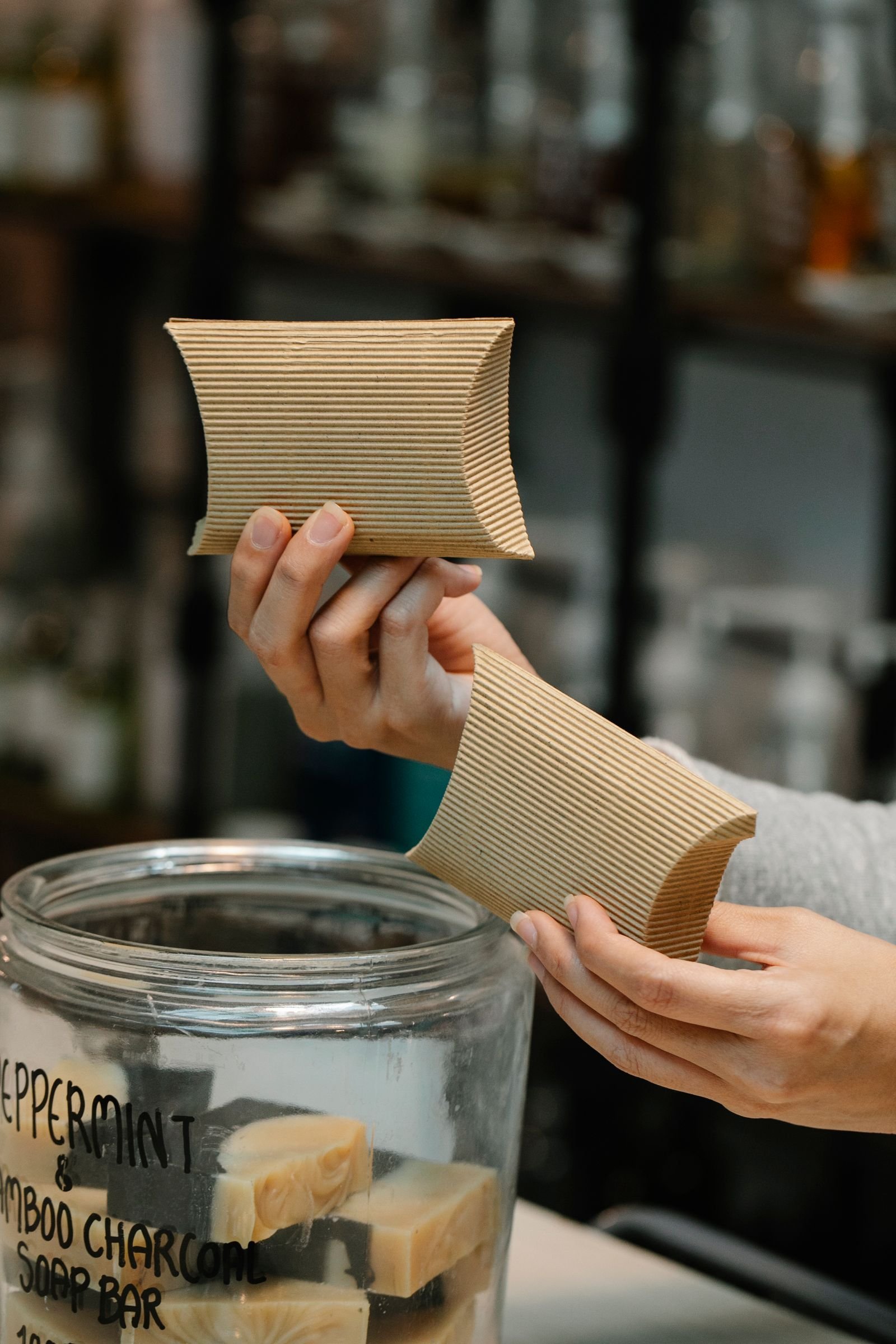
Almost every paperboard and corrugated style can be produced in biodegradable materials. Tuck end cartons are efficient and use little material. Roll end tuck front mailers are sturdy, self-locking and ideal for e-commerce. Sleeve and tray boxes feel premium and can be designed so both parts are paper. Pillow boxes, gable boxes and hexagon boxes add personality for gifts and favors. Styles that lock together with tabs and slots are especially useful because they reduce or eliminate glue and tape, keeping the box as clean and simple as possible.
Printing Biodegradable Boxes
Printing is one of the areas where small choices make a real difference. We print biodegradable boxes with water-based and low-impact inks wherever possible, and we encourage designs that use ink thoughtfully rather than flooding every panel with heavy solid color. Natural kraft looks striking with one or two spot colors, especially black, white, deep green or earthy tones. When full-color images are important, digital and offset printing on white recycled or white-top kraft board reproduce photographs accurately. Inside printing is a great place for a short brand story, care instructions or a reminder about how to dispose of the box.
Finishes Without Plastic
Traditional packaging finishes such as gloss, matte and soft-touch lamination add a thin plastic film to the board, which works against a biodegradable message. Instead, we recommend uncoated board for the most natural feel, or a thin aqueous coating when scuff resistance is needed. Decorative effects can be achieved with embossing and debossing, which shape the board itself and add no extra material, and with careful die-cut details. If you love the look of metallic accents, talk to us first: some brands accept a small foil detail as a trade-off, while others prefer an ink-based metallic or a blind deboss to stay fully fiber-based.
Inserts and Protective Packaging
The outer box is only part of the story. Foam blocks, plastic trays and bubble wrap undo much of the benefit of a biodegradable carton. We design die-cut paperboard inserts that cradle bottles, jars and kits, corrugated partitions for multi-item sets, and recommend molded pulp for fragile shapes such as glassware and electronics accessories. Shredded kraft paper, crinkle paper and paper honeycomb wrap fill empty space attractively. When the insert is made from the same family of materials as the box, the customer can dispose of the whole package in one step.
Windows and Biodegradable Packaging
Product windows are traditionally covered with a clear plastic film, which is a problem for a fully biodegradable box. There are several alternatives. An open die-cut window without any film shows the product while keeping the box all paper, and works well for soaps, candles and solid goods. A cut-out shape or pattern can hint at the product inside while also forming part of the design. Some brands use plant-based film alternatives, but their behavior varies by material and local facilities, so we advise checking claims carefully before relying on them. For many products a high-quality printed image of the contents is just as effective as a window.
Industries That Choose Biodegradable Boxes
Natural cosmetics and skincare brands use kraft cartons that echo their clean-ingredient message. Soap makers favor open-window kraft boxes and wraps. Tea, coffee and dry food producers use biodegradable outer cartons around inner bags. Candle companies pair kraft boxes with paper inserts. Apparel and accessories brands ship in kraft mailers with tissue and paper fill. Subscription boxes, wellness and supplement brands, pet product companies, gift shops and event planners all use biodegradable packaging to align their presentation with what their customers value.
Designing a Biodegradable Box That Sells
A natural material gives you a strong starting point. Let the texture of kraft board be part of the design rather than something to hide. Use clear typography, a confident logo and plenty of breathing space. Choose a limited palette that contrasts well with brown or off-white board. Put the most important benefit on the front panel, use the sides for ingredients and details, and dedicate a small area to disposal guidance. Simple icons for “recycle” or “compost where facilities exist” help customers act correctly. Our designers can lay out your artwork on the exact dieline and show you a 3D mockup before anything is printed.
Making Honest Environmental Claims
Environmental claims on packaging should be specific, accurate and easy to understand. Rather than a vague phrase like “earth friendly,” describe the material and what the customer should do: for example, “made from kraft paperboard, please recycle” or “box and insert are paper-based.” Only use the word compostable if the finished packaging, including inks, glues and any coatings, has been shown to meet a recognized compostability standard. Avoid implying that a box will break down in a landfill quickly, since landfill conditions slow decomposition considerably. Clear, honest messaging builds trust and keeps your brand on the right side of advertising guidelines.
Disposal and End of Life
For most fiber-based boxes, the best end-of-life route is curbside recycling, where the fibers can be reused many times. When a box is soiled with food or grease and cannot be recycled, composting is often a good alternative where local programs accept it. Uncoated kraft boxes can also break down in a well-managed home compost pile when torn into smaller pieces. Telling customers which route to use, and keeping the box free of plastic parts that would need to be separated, makes it far more likely that your packaging ends up in the right place.
Biodegradable Boxes vs Conventional Packaging
Compared with plastic clamshells, blister packs and foam-lined boxes, biodegradable paper boxes are lighter, widely recyclable and much less persistent in the environment. Compared with standard printed cartons, the main differences are in the details: no plastic lamination, fiber-based inserts, careful ink choices and fewer mixed materials. In most cases the cost difference is small, and sometimes biodegradable packaging is less expensive because it skips lamination and plastic components. The trade-offs are usually a more natural, less glossy appearance and slightly less moisture resistance, which can be managed with good design and storage.
Pricing Factors for Biodegradable Boxes
The price of custom biodegradable boxes depends on quantity, board grade and thickness, box size, style complexity, the number of printed colors and sides, and the type of insert. Unit cost decreases as quantity increases. Natural kraft with one- or two-color printing is typically the most economical approach, while full-color printing on white board, molded pulp inserts or intricate die-cut details add cost. PackagingAazz does not charge for cutting dies or printing plates, and our team can suggest small adjustments, such as right-sizing or simplifying an insert, that reduce both material and price.
Common Mistakes to Avoid
The most frequent mistake is ordering a kraft box and then adding a plastic laminate, a plastic window and a foam insert, which leaves a package that looks natural but is not. Others include using board that is too thin for the product, making unsupported compostability claims, storing paper boxes in damp areas where they absorb moisture, and oversizing boxes so that extra fill is needed. Printing large areas of dark ink on uncoated kraft can also look patchy. We review each of these points during structural design and prepress.
Storing and Handling Biodegradable Boxes
Because biodegradable boxes avoid plastic coatings, they are more sensitive to humidity than laminated cartons. Store flat-packed boxes indoors on pallets or shelves, off concrete floors, away from exterior doors, and out of direct sunlight, which can fade inks and darken kraft. Keep them in their outer cartons until needed. Rotate stock so older boxes are used first. If your products contain oils or moisture, an inner paper wrap or a grease-resistant paper liner can protect the outer box during its time on the shelf.
Ordering Biodegradable Boxes Across the USA
Start by sharing your product dimensions, weight and quantity, and tell us how the box will be used: retail shelf, gift, subscription or shipping. We recommend a style, board and insert, prepare a dieline and a free 3D mockup, and refine the design with you until you approve it. Once approved, we print, cut, crease and glue your boxes and run quality checks on color and construction. Boxes are then packed flat and shipped to your address anywhere in the United States.
PackagingAazz is based at 1835 W 82nd St, Los Angeles, CA 90047, and ships custom biodegradable boxes to businesses in all 50 states. Call +1 (213) 597-4368 or email sales@packagingaazz.com for a free quote and free 3D mockup. We are open 24 hours, 7 days a week, so you can reach a packaging specialist whenever it suits your schedule.
WHAT WE MAKE
Biodegradable Box Styles We Make
Each biodegradable box below is built from fiber-based board to your dimensions, with plastic-free inserts and finishes wherever your product allows.
Biodegradable Tuck End Boxes
Simple kraft cartons with tuck flaps for soaps, tea, cosmetics and small goods, made entirely from paperboard.
Biodegradable Mailer Boxes
Self-locking kraft corrugated mailers that ship products safely without plastic tape, foam or bubble wrap.
Biodegradable Shipping Boxes
Plain or printed corrugated shipping cartons in kraft board for heavier e-commerce orders and wholesale shipments.
Biodegradable Soap Boxes
Breathable kraft boxes and wraps with open die-cut windows that show handmade soap without plastic film.
Biodegradable Cosmetic Boxes
Kraft or white recycled cartons for skincare, balms and makeup, finished without lamination or plastic windows.
Biodegradable Candle Boxes
Sturdy kraft cartons with paperboard inserts that hold jar, tin and pillar candles securely in place.
Biodegradable Food Boxes
Food-grade paperboard boxes for bakery treats, snacks and dry goods, designed for easy recycling or composting.
Biodegradable Tea Boxes
Compact kraft cartons for loose-leaf tea and tea bags, often paired with an inner paper pouch.
Biodegradable Gift Boxes
Two-piece and magnetic-look kraft gift boxes with paper fill, debossed logos and twine instead of ribbon.
Biodegradable Sleeve Boxes
Paper sleeves sliding over kraft trays, ideal for chocolates, soaps, accessories and curated gift sets.
Biodegradable Pillow Boxes
Lightweight curved kraft boxes for favors, jewelry, gift cards and small accessories.
Biodegradable Gable Boxes
Carry-handle boxes in kraft board for bakery items, party favors and takeaway treats.
Biodegradable Apparel Boxes
Folding kraft boxes for T-shirts, socks and accessories, lined with tissue rather than plastic bags.
Biodegradable Subscription Boxes
Printed kraft mailers with paper dividers that make monthly deliveries feel considered and low waste.
Biodegradable Display Boxes
Countertop kraft displays that hold multiple units and fold flat for easy recycling after use.
Biodegradable Jewelry Boxes
Small kraft boxes with paper pads or cardboard slots for earrings, rings, necklaces and bracelets.
Biodegradable Boxes with Pulp Inserts
Kraft cartons paired with molded pulp trays that protect glass, ceramics and delicate items.
Biodegradable Supplement Boxes
Precise paperboard cartons for bottles and pouches with space for ingredient and dosage information.
Biodegradable Pet Product Boxes
Kraft cartons for natural treats, grooming products and accessories aimed at eco-minded pet owners.
Biodegradable Hexagon Boxes
Six-sided kraft boxes that stand out on the shelf for candles, sweets and gifts.
PACKAGING EXPERTS. CAREFUL WORK.
Biodegradable Packaging Without Compromise
Fiber-first construction. We look at every part of the package, from board and inks to inserts and glue, and suggest paper-based alternatives so your biodegradable box stays true to its name while still protecting the product.
Honest, practical guidance. We explain the real trade-offs of each material and finish, help you choose accurate disposal wording, and check board strength so boxes perform well from our factory floor to your customer’s doorstep.
Dielines & 3D mockups
No die & plate charges
Short runs welcome
All 50 states
WHAT'S INCLUDED
What's Included With Every Custom Biodegradable Boxes Order
Product Measurement
We confirm the exact inside dimensions your product needs before recommending a structure.
Dieline & Structure
Custom dielines, inserts and closures planned so every box folds, locks and fits properly.
Free 3D Mockup
See your artwork on the real box shape and request changes before anything is printed.
Expert Printing
Offset, digital or flexo printing matched to your quantity, material and brand colors.
Quality Checks
Every run is checked for color, cutting, gluing and finishing before it is packed.
Flat-Pack Delivery
Boxes ship flat to save space and freight, to any address in the USA.
MATERIALS & FINISHES
Materials & Finishes for Custom Biodegradable Boxes
SBS Paperboard
Bright white, smooth board from 14 to 24 point that gives the sharpest print and most vibrant color for retail cartons.
Kraft Paperboard
Natural brown, strong and recyclable board for eco-friendly, organic and artisan brands, printable with white ink.
Corrugated Board
E-flute and B-flute board with excellent crush and stacking strength for mailers, shippers and heavier products.
Rigid Chipboard
Thick 1 to 3 mm board wrapped in printed or textured paper for luxury, gift and presentation boxes.
Gloss & Matte Lamination
Protective films that make colors vivid with gloss or modern and low-glare with matte, while resisting scuffs.
Soft-Touch Finish
A velvety lamination that feels premium in the hand and resists fingerprints on dark designs.
Foil Stamping & Spot UV
Metallic gold, silver or holographic foil and glossy spot UV highlights for logos and key details.
Embossing & Debossing
Raised or pressed logos and patterns that add a tactile, crafted feel to any box style.
HOW IT WORKS
Order Custom Biodegradable Boxes in 4 Simple Steps
1. Share Your Details
Send box style, size, quantity and artwork ideas by form or call +1 (213) 597-4368.
2. Free Design & Mockup
Our designers prepare the dieline and a 3D proof for your approval.
3. Clear Quotation
You get a written quote with material, print, finish and timeline.
4. Print & Deliver
We print, finish, inspect and ship your boxes anywhere in the USA.
FREQUENTLY ASKED QUESTIONS
Custom Biodegradable Boxes FAQs
Are your biodegradable boxes made entirely from paper?
Wherever possible, yes. We use kraft, recycled paperboard and corrugated board with paper inserts, and recommend avoiding plastic films, windows and laminations so the whole box is fiber-based.
What is the difference between biodegradable and compostable boxes?
Biodegradable means organisms eventually break the material down. Compostable is a stricter claim requiring breakdown within a set time in composting conditions, usually verified by testing.
Can biodegradable boxes be recycled?
Yes. Plain paperboard and corrugated boxes are widely accepted in US curbside recycling, which is usually the best end-of-life route for clean boxes.
Can you print full color on biodegradable boxes?
Yes. We print full color on white recycled or white-top kraft board, and one- or two-color designs look excellent on natural kraft.
What finishes keep a box biodegradable?
Uncoated board, light aqueous coating, embossing and debossing keep boxes fiber-based. Plastic lamination is best avoided because it adds a film that does not break down with the board.
Can I have a window on a biodegradable box?
Yes. Open die-cut windows without film keep the box all paper and work well for soaps, candles and other solid products.
Are biodegradable boxes strong enough for shipping?
Yes, when the right board is chosen. Kraft corrugated mailers with fitted paper inserts protect products well in parcel networks.
Do biodegradable boxes cost more?
Often the difference is small, and skipping lamination and plastic components can even reduce cost. Quantity, size, printing and inserts drive the final price.
How should I store biodegradable boxes?
Keep them flat, indoors, off the floor and away from humidity and sunlight, because uncoated paper absorbs moisture more readily than laminated board.
Do you ship biodegradable boxes nationwide?
Yes. PackagingAazz ships flat-packed biodegradable boxes to all 50 states, with low minimums and no die or plate charges.
GET STARTED
Free Quote for Custom Biodegradable Boxes
Tell us your box style, size, quantity and finish. We reply with a clear written quote and a free design mockup. No obligations, no cost.
"*" indicates required fields
Contact PackagingAazz
Talk to a packaging specialist about sizes, materials, printing and pricing.
- Call: +1 (213) 597-4368
- sales@packagingaazz.com
- 1835 W 82nd St, Los Angeles, CA 90047
- Free design & written quote
- Shipping to all 50 states
EXPLORE MORE
Related Packaging Services
Custom Eco-Friendly Boxes
Low-impact packaging choices
Custom Recyclable Boxes
Curbside-ready paper packaging
Custom Kraft Boxes
Natural brown kraft packaging
Custom Mailer Boxes
Self-locking e-commerce mailers