PACKAGINGAAZZ USA · SHIPPING BOX PACKAGING
Custom Shipping Boxes
in the USA
Every order your business sends depends on the box around it. PackagingAazz manufactures custom shipping boxes in single-wall and double-wall corrugated board, sized to your products, printed with your logo or handling marks, and delivered flat to all 50 states, with free design support, free 3D mockups, low minimums and no die or plate charges.
- ★★★★★ Trusted by brands & businesses across the USA
Corrugated strength for parcel and freight.
Less void fill, lower dimensional weight.
Logos, handling marks and labels printed on.
SERVICE DETAILS
Custom Shipping Boxes – PackagingAazz
Shipping boxes are the workhorses of commerce. They carry products from factories to warehouses, from distribution centers to stores and from online sellers to front doors. A well chosen shipping box resists crushing, stacking and impacts along the way, while a poorly chosen one leads to damaged goods, returns and wasted money on oversized cartons and filler.
At PackagingAazz we make custom shipping boxes from corrugated board selected for the weight, fragility and journey of your products. We offer regular slotted cartons, half slotted containers, full overlap cartons, telescoping boxes, die-cut shipping boxes and more, each built to your inside dimensions and printed with as much or as little branding as you need.
Our shipping boxes serve e-commerce sellers, wholesalers, manufacturers, distributors, retailers moving stock between locations, and fulfillment operations that pack hundreds of orders a day. Every box is reviewed in a free 3D mockup, there are no die or plate charges, and minimums are low enough to fit growing businesses as well as established ones.
Custom sizing is where shipping boxes pay for themselves. A box built around your product needs less tape and void fill, reduces movement and breakage, and lowers dimensional weight charges from carriers. Corrugated board is also one of the most widely recycled materials in the United States, so the right box is good for both your margins and the environment.
READ MORE — COMPLETE GUIDE TO CUSTOM SHIPPING BOXES
What Are Custom Shipping Boxes?
Custom shipping boxes are corrugated containers designed specifically to move goods safely through transport networks, made to your dimensions instead of chosen from a generic catalog of stock sizes. They may travel by parcel carrier, by less-than-truckload freight, on full pallets or inside shipping containers. Their main job is protection: resisting compression from stacking, absorbing shocks from drops, and keeping contents together and dry enough to arrive intact. Secondary jobs include identifying the contents, carrying handling instructions and, increasingly, representing the brand to the customer who receives them. A custom shipping box balances all of these requirements around a specific product and route.
How Corrugated Board Provides Strength
Corrugated board is made by gluing a fluted paper medium between flat paper liners. The arches of the flutes act like small columns and beams, giving the board high stiffness and stacking strength relative to its weight. Board is described by its wall construction: single-wall has one fluted layer between two liners, double-wall has two fluted layers and three liners, and triple-wall has three fluted layers for very heavy industrial loads. Most parcel shipping boxes are single-wall, while double-wall is chosen for heavier products, multi-item cartons, fragile goods and boxes that will sit at the bottom of tall stacks in storage.
Choosing Flute Size for Shipping Boxes
Flute profiles vary in height and number of flutes per foot. C-flute is the most widely used profile for general shipping cartons because it offers a good balance of stacking strength and cushioning. B-flute is thinner and firmer, with good puncture resistance and better printability, suitable for smaller shipping boxes and die-cut styles. BC double-wall combines both for demanding loads. E-flute is thin and prints beautifully but is usually reserved for lighter shipments and branded mailers. Choosing the right flute depends on product weight, how high the boxes will be stacked, whether they travel on pallets or individually, and how much print quality matters.
Understanding Board Strength Ratings
Corrugated board is commonly rated in two ways in the United States. The Edge Crush Test (ECT) measures how much force the board’s edge can withstand before crushing, which relates directly to stacking strength; it is the more common rating for modern shipping boxes. The Mullen or burst test measures how much pressure the board’s face withstands before rupturing, which relates to puncture resistance and rough handling. Many boxes carry a manufacturer’s certificate printed on the bottom flap that states the rating and weight limits. We help you choose a board rating suited to your product weight and handling conditions rather than simply defaulting to the heaviest board, which adds cost and weight.
Regular Slotted Containers and Other Box Styles
The regular slotted container (RSC) is the most common shipping box in the world: four flaps on the top and bottom, all the same length, with the outer flaps meeting in the center. It is efficient to manufacture and uses board economically. The half slotted container (HSC) has flaps only on one end and is often paired with a separate lid. Full overlap (FOL) cartons have outer flaps that overlap completely, adding strength across the top and bottom for heavy or long items. Telescoping boxes slide a lid over a base for adjustable height. Die-cut shipping boxes such as roll end tuck front and one-piece folders are cut to shape for tape-free closure and a tidier presentation. We help you pick the style that suits your product and packing process.
Measuring for the Right Shipping Box
Shipping boxes are specified by inside dimensions in length by width by depth, where length and width describe the opening and depth is the distance from the opening to the bottom. Start with your product or the largest combination of items you ship together, then add space for any protective material such as wrap, inserts or corner pads. If products ship without cushioning, a snug fit is best. If they need cushioning, allow enough room for it on every side. Measuring the inside rather than the outside matters because board thickness adds to the outer size, especially with double-wall construction.
Dimensional Weight and Shipping Costs
Major parcel carriers charge based on the greater of actual weight and dimensional weight, which is calculated from the box’s outer volume. That means a light product in an oversized box can cost far more to ship than it needs to. Custom shipping boxes sized close to your products reduce the cubic volume of every parcel, which can lower freight costs significantly over a year of orders. Right-sizing also reduces the amount of void fill needed and fits more boxes on each pallet and truck. When we design your box, we look at product dimensions, packing method and cushioning requirements to find the smallest practical size.
Printing and Branding on Shipping Boxes
Shipping boxes can be left plain, printed with a single logo, or fully branded. Flexographic printing is the traditional method for corrugated shipping boxes: it uses flexible plates and water-based inks, works well on kraft, and is efficient for one to three color logos and text across large runs. Digital printing handles full-color graphics, short runs and variable designs without plates. Litho-lamination applies an offset-printed sheet to the board for photographic quality on retail-ready shipping cartons. Even simple branding, such as a logo on two panels and a website address, makes your parcels recognizable on porches and in mailrooms.
Handling Marks and Functional Printing
Shipping boxes often carry practical information as well as branding. Common functional printing includes handling symbols such as this side up, fragile, keep dry and do not stack; product codes and descriptions for warehouse picking; barcode or label zones reserved for shipping labels and SKU stickers; case counts showing how many units the box holds; and opening instructions for retail staff. Placing these elements consistently on every carton speeds up receiving and reduces handling errors. We help you plan these panels alongside your brand artwork so the box is both attractive and operationally useful. If you sell many variants in similar cartons, a printed color band or a large, easy-to-read SKU panel on two adjacent sides lets warehouse staff identify the right box from any angle on a shelf or pallet, which reduces picking mistakes during busy periods.
Interior Protection and Inserts
The box is only part of the protection system. Corrugated partitions separate bottles, jars and glass items. Die-cut inserts lock products into position so they cannot shift. Pads and corner protectors reinforce vulnerable points. Suspension and retention designs hold delicate items away from the walls. Paper-based void fill, molded pulp and honeycomb paper can replace plastic air pillows and foam where recyclability is important. Matching the insert to the box often allows a smaller outer carton, which reduces shipping cost while improving protection.
Shipping Boxes for E-commerce
Online sellers ship single orders directly through parcel networks, where boxes are dropped, tossed, conveyed and stacked many times before arriving. For e-commerce, single-wall boxes in B-flute or C-flute often provide the best mix of strength and weight, while fragile items may need double-wall or added inserts. Self-seal adhesive strips and tear strips speed up packing and opening, and dual adhesive strips allow returns in the same box. Printing your logo on the outside builds brand recognition, while keeping the design discreet can be wise for high-value goods that might attract theft.
Shipping Boxes for Wholesale and Freight
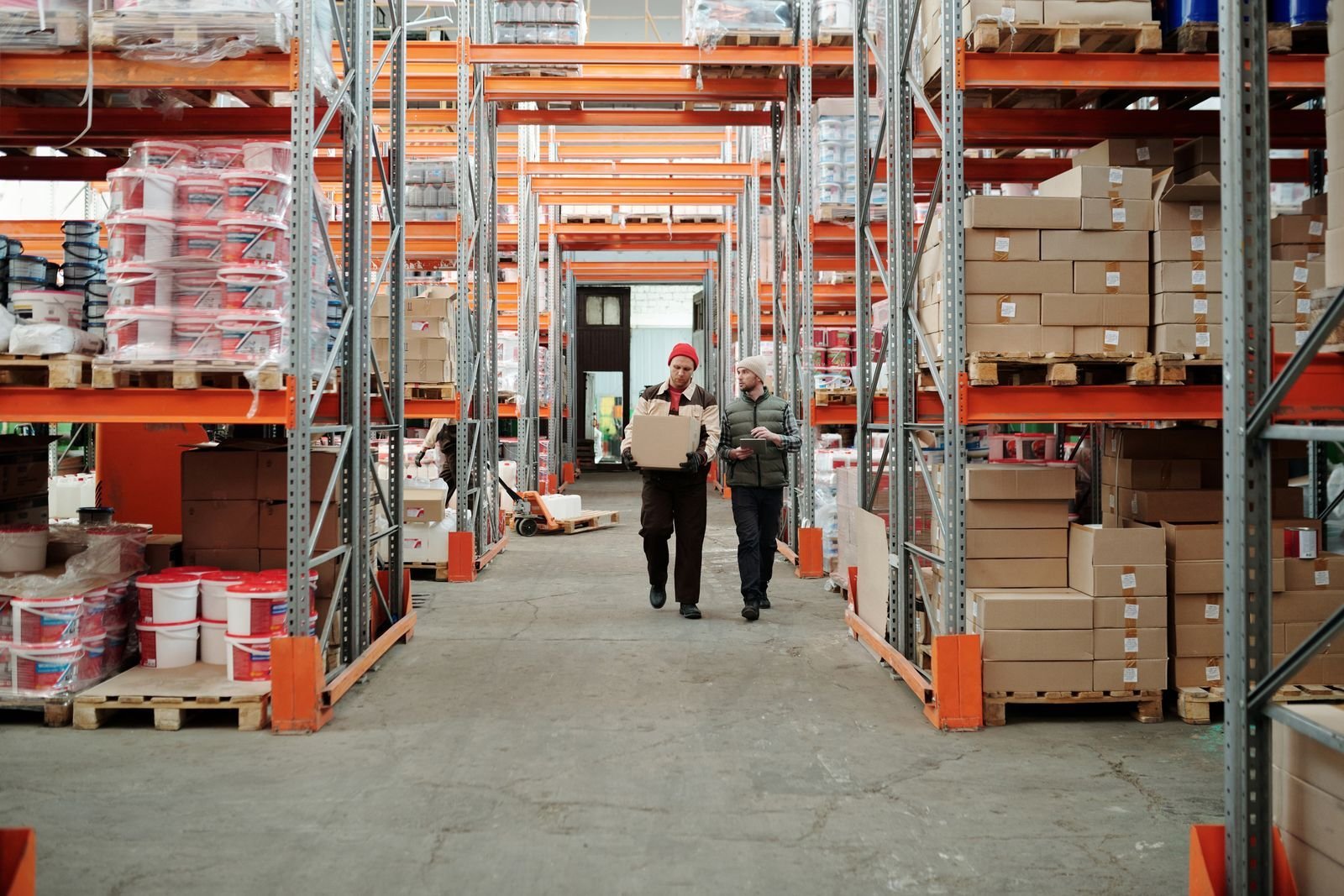
Boxes shipped in bulk to retailers and distributors face different stresses. They are typically stacked on pallets, wrapped and moved by forklift, so compression strength over time matters more than individual drop resistance. Boxes should fit efficiently on standard pallets without overhang, which can weaken stacks. Clear labeling of contents and case counts helps receiving staff. For retail-ready packaging, cartons may include perforated tear-away panels that convert the shipping box into a shelf display. We can design master cartons that hold your retail boxes neatly and stack securely. It also helps to align the box footprint so that cartons interlock in alternating layers on the pallet, a pattern that spreads load across corners and makes the whole stack more stable during transport. Telling us your pallet size and target stack height lets us plan the carton dimensions around them from the start.
Industries That Use Custom Shipping Boxes
E-commerce and direct-to-consumer brands ship every product category imaginable. Food and beverage producers ship cases of jars, bottles and packaged goods. Cosmetics and personal care companies ship bulk stock and individual orders. Electronics and appliance sellers use double-wall boxes with inserts. Furniture and home goods brands need large boxes and full overlap styles. Industrial and automotive suppliers ship parts and tools in heavy-duty cartons. Pharmacies, labs and medical suppliers use clearly labeled shipping boxes for supplies. Printers, publishers and stationers ship books and paper goods, which are dense and heavy for their size.
Sustainability in Shipping Packaging
Corrugated shipping boxes are made largely from renewable fibers and are widely accepted in curbside and commercial recycling across the United States. Boxes with high recycled content reduce demand for virgin fiber. The biggest environmental gains, however, usually come from right-sizing: smaller boxes use less board, need less filler, and allow more parcels per truck, cutting fuel use per shipment. Using water-based inks, paper tape and paper void fill keeps the whole package recyclable in one stream. Printing a short recycling reminder on the box encourages customers to flatten and recycle it.
Factors That Affect Shipping Box Pricing
The price of a custom shipping box depends on its size, wall construction, flute profile, board rating, style, quantity, printing and extras. Double-wall boxes use more material than single-wall; large boxes use more board than small ones; full overlap styles use more than regular slotted containers. Printing coverage and the number of colors affect cost, as do features like tear strips, adhesive closures, hand holes and inserts. Higher quantities reduce the unit price. PackagingAazz does not charge for dies or plates, so even custom sizes and printed designs remain accessible for smaller runs.
Common Shipping Box Mistakes
Typical mistakes include using one large box size for every order, which increases dimensional weight and damage from movement; choosing board that is too weak for the product weight or stacking height; relying on excessive tape instead of a proper closure; storing boxes in damp areas, where corrugated loses much of its strength; placing branding where shipping labels will cover it; and ignoring how boxes will be packed and palletized. Reviewing your product range, order profile and shipping routes with our team helps avoid these problems from the start. Many businesses find that a small family of three or four custom sizes covers most of their orders far better than a single generic carton, without making inventory complicated to manage.
Packing, Sealing and Storing Shipping Boxes
Custom shipping boxes arrive flat to save warehouse space. Store them in a dry, cool area off the floor, since humidity weakens corrugated board and reduces stacking strength. When packing, place heavier items at the bottom, fill gaps so contents cannot shift, and seal the box with an appropriate method: pressure-sensitive tape, water-activated paper tape or built-in adhesive strips. The H-taping method, which seals the center seam and both edge seams, adds security for heavier boxes. Apply the shipping label on the largest flat surface away from seams.
Ordering Custom Shipping Boxes Across the USA
PackagingAazz is based at 1835 W 82nd St, Los Angeles, CA 90047, and ships custom shipping boxes flat to businesses in all 50 states. Call 31202340234 or email info@packagingaazz.com for a free quote, structural advice or a 3D mockup. We are open 24 hours a day, 7 days a week.
WHAT WE MAKE
Shipping Box Styles We Make
Each shipping box below is made to your inside dimensions in single-wall or double-wall corrugated board, plain or printed with your branding.
Regular Slotted Shipping Boxes
The standard four-flap corrugated carton, economical and versatile for nearly every product and shipping method.
Half Slotted Containers
Open-top cartons with flaps on one end, often paired with a separate lid for easy access.
Full Overlap Shipping Boxes
Cartons whose outer flaps overlap completely for extra strength on heavy, long or dense products.
Double-Wall Shipping Boxes
Two fluted layers for heavier loads, fragile goods and boxes stacked high in storage.
Single-Wall Shipping Boxes
Lightweight, cost-effective cartons for everyday parcel shipments and medium-weight products.
Telescoping Shipping Boxes
Separate lid and base that slide together, ideal for adjustable heights and flat or long items.
Die-Cut Shipping Boxes
Precision-cut boxes with locking tabs that assemble without tape and present neatly.
Self-Seal Shipping Boxes
Boxes with built-in adhesive strips that seal quickly on busy packing lines.
Tear Strip Shipping Boxes
Perforated zip strips that let customers open boxes cleanly without knives or scissors.
Return-Ready Shipping Boxes
Dual adhesive strips so customers can reuse the same box to send items back.
Kraft Shipping Boxes
Natural brown corrugated cartons printed with logos, handling marks or simple branding.
White Shipping Boxes
Clean white liners for brands that want bright, modern shipping cartons with crisp print.
Printed Shipping Boxes
Full-color or flexo-printed cartons that make every delivery recognizable on arrival.
Shipping Boxes with Partitions
Corrugated dividers that separate bottles, jars and glassware during transit.
Shipping Boxes with Inserts
Die-cut inserts that hold products firmly in place and reduce the need for void fill.
Master Shipping Cartons
Outer cases that hold multiple retail boxes for wholesale shipments and pallet loads.
Shelf-Ready Shipping Boxes
Cartons with tear-away panels that convert into retail displays when they reach the store.
Large Shipping Boxes
Oversized cartons for furniture, home goods, equipment and bulky items.
Heavy-Duty Shipping Boxes
Strong double-wall or reinforced cartons for tools, parts and dense industrial products.
Long Shipping Boxes
Elongated cartons for posters, rods, lighting, rugs and other long or narrow items.
PACKAGING EXPERTS. CAREFUL WORK.
Shipping Boxes Built for the Whole Journey
Board matched to the route. We consider product weight, stacking height and whether boxes travel by parcel or pallet, then recommend the wall, flute and rating that protect without overspending.
Sized to save. Boxes built around your products reduce void fill, dimensional weight and damage, so the savings show up on every shipment you send.
Dielines & 3D mockups
No die & plate charges
Short runs welcome
All 50 states
WHAT'S INCLUDED
What's Included With Every Custom Shipping Boxes Order
Product Measurement
We confirm the exact inside dimensions your product needs before recommending a structure.
Dieline & Structure
Custom dielines, inserts and closures planned so every box folds, locks and fits properly.
Free 3D Mockup
See your artwork on the real box shape and request changes before anything is printed.
Expert Printing
Offset, digital or flexo printing matched to your quantity, material and brand colors.
Quality Checks
Every run is checked for color, cutting, gluing and finishing before it is packed.
Flat-Pack Delivery
Boxes ship flat to save space and freight, to any address in the USA.
MATERIALS & FINISHES
Materials & Finishes for Custom Shipping Boxes
SBS Paperboard
Bright white, smooth board from 14 to 24 point that gives the sharpest print and most vibrant color for retail cartons.
Kraft Paperboard
Natural brown, strong and recyclable board for eco-friendly, organic and artisan brands, printable with white ink.
Corrugated Board
E-flute and B-flute board with excellent crush and stacking strength for mailers, shippers and heavier products.
Rigid Chipboard
Thick 1 to 3 mm board wrapped in printed or textured paper for luxury, gift and presentation boxes.
Gloss & Matte Lamination
Protective films that make colors vivid with gloss or modern and low-glare with matte, while resisting scuffs.
Soft-Touch Finish
A velvety lamination that feels premium in the hand and resists fingerprints on dark designs.
Foil Stamping & Spot UV
Metallic gold, silver or holographic foil and glossy spot UV highlights for logos and key details.
Embossing & Debossing
Raised or pressed logos and patterns that add a tactile, crafted feel to any box style.
HOW IT WORKS
Order Custom Shipping Boxes in 4 Simple Steps
1. Share Your Details
Send box style, size, quantity and artwork ideas by form or call 31202340234.
2. Free Design & Mockup
Our designers prepare the dieline and a 3D proof for your approval.
3. Clear Quotation
You get a written quote with material, print, finish and timeline.
4. Print & Deliver
We print, finish, inspect and ship your boxes anywhere in the USA.
FREQUENTLY ASKED QUESTIONS
Custom Shipping Boxes FAQs
What is the difference between single-wall and double-wall boxes?
Single-wall has one fluted layer and suits most parcels. Double-wall has two fluted layers for heavier, fragile or high-stacked shipments.
What is an RSC shipping box?
A regular slotted container has four equal-length flaps on top and bottom. It is the most common and economical shipping box style.
Which flute is best for shipping boxes?
C-flute is the general-purpose standard. B-flute suits smaller boxes and better print, while BC double-wall handles heavy loads.
What does ECT mean on a shipping box?
ECT stands for Edge Crush Test, a rating of how much stacking force the corrugated board can withstand before crushing.
How can custom boxes lower my shipping costs?
Right-sized boxes reduce dimensional weight charges, use less void fill and fit more efficiently on pallets and trucks.
Can you print my logo on shipping boxes?
Yes. We offer flexo, digital and litho-laminated printing, from a simple one-color logo to full-color designs.
Can you add handling symbols and product codes?
Yes. We print fragile marks, this-side-up arrows, SKUs, case counts and label zones alongside your branding.
Are corrugated shipping boxes recyclable?
Yes. Corrugated board is widely recycled across the USA, especially when packed with paper tape and paper void fill.
Do you make shipping boxes with inserts or dividers?
Yes. We make corrugated partitions, die-cut inserts and pads that hold products securely during transit.
Do you deliver shipping boxes nationwide?
Yes. We ship flat-packed shipping boxes to all 50 states with low minimums and no die or plate charges.
GET STARTED
Free Quote for Custom Shipping Boxes
Tell us your box style, size, quantity and finish. We reply with a clear written quote and a free design mockup. No obligations, no cost.
Contact PackagingAazz
Talk to a packaging specialist about sizes, materials, printing and pricing.
- Call: 31202340234
- info@packagingaazz.com
- 1835 W 82nd St, Los Angeles, CA 90047
- Free design & written quote
- Shipping to all 50 states
EXPLORE MORE
Related Packaging Services
Custom Mailer Boxes
Self-locking branded mailers
Custom Postal Boxes
Mail-ready boxes for parcels
Custom Corrugated Boxes
Fluted board built for transit
Custom Wholesale Boxes
Bulk packaging at scale