
PackagingAazz offers edge painting for rigid boxes, adding a crisp band of color to exposed board edges so luxury and gift packaging looks finished from every angle.
Matched to your brand
See edges before production
Shipped to all 50 states
Edge painting, sometimes called edge coloring or edge gilding when metallic, applies color to the visible edges of a box or its components. On rigid packaging it is most often used where chipboard edges would otherwise show: the rim of an inner tray, the edge of a board insert, a drawer box face, the cut edges of a thick lid or a layered platform. A colored edge hides raw grey board, adds a premium detail customers notice when they lift the lid, and can create a contrasting accent that ties back to your brand palette.
We plan edge painting together with your box construction, wrap paper and inserts, then show the effect in your free 3D mockup. Colors are chosen to complement or contrast with your wrap, and the finish is applied carefully and inspected before boxes are assembled and shipped from Los Angeles anywhere in the United States.
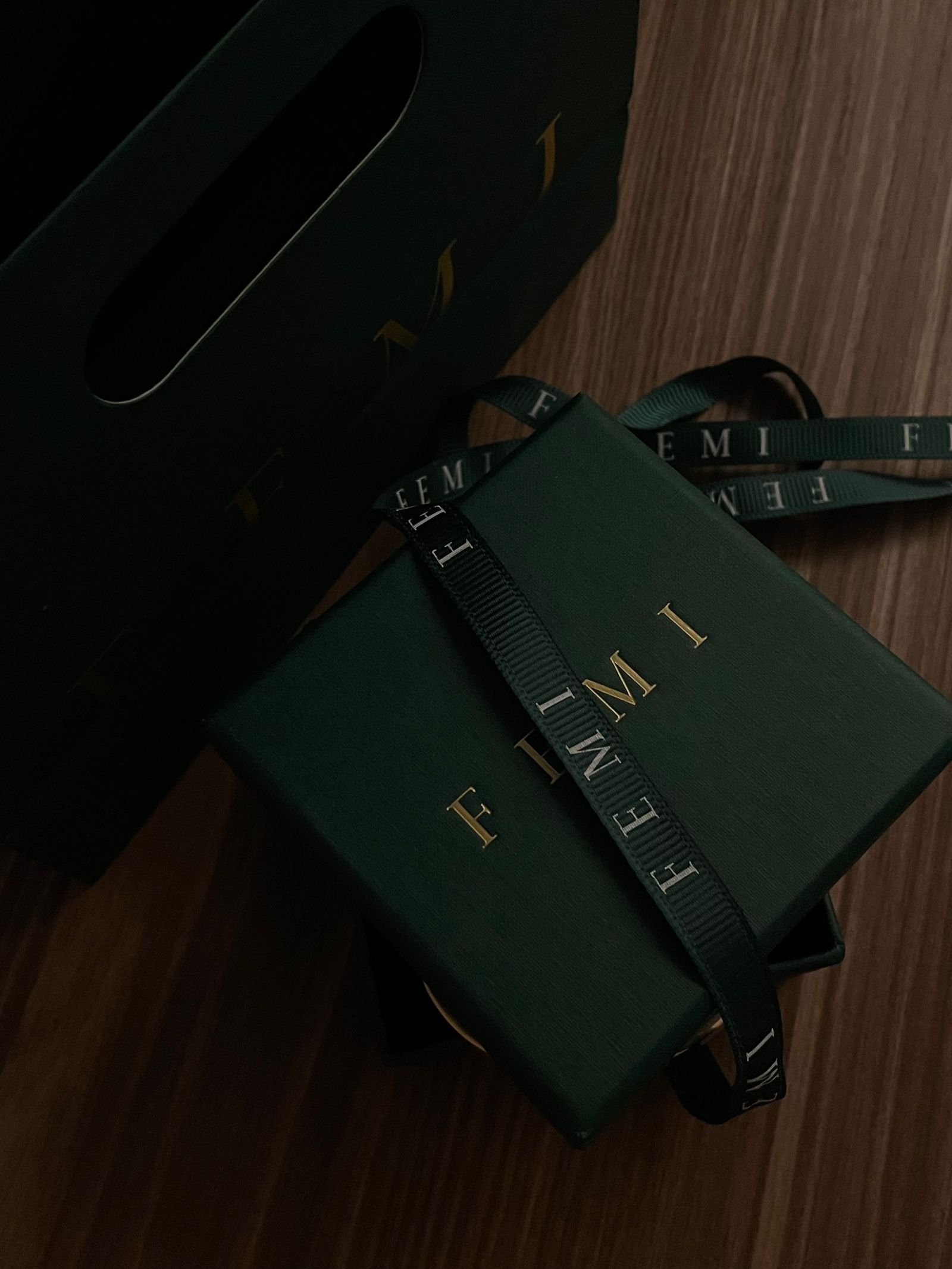
Luxury packaging lives in the details. Customers notice the weight of a rigid box, the texture of the wrap paper and the way the lid slides off. They also notice when something looks unfinished. Raw grey chipboard peeking out from the edge of an insert or tray can undermine an otherwise premium presentation. Edge painting solves that by coloring exposed edges, and it can do more than hide board: a contrasting edge can become a signature design element in its own right.
Most rigid boxes are made from thick chipboard wrapped in printed or specialty paper. The wrap covers the outside surfaces and folds over the edges of the base and lid. But many rigid packaging parts leave edges exposed:
In each of these places, an edge left raw looks like an unfinished cut. An edge painted to match or contrast with the wrap looks intentional.
| Approach | Effect | Works well for |
|---|---|---|
| Tone-on-tone | Edge matches surface color; seamless, solid look | Minimal luxury, black or white boxes |
| Contrast color | Thin bright line that frames the component | Fashion, streetwear, bold brand palettes |
| Metallic-look edge | Gold, silver or copper accent | Jewelry, watches, fragrance, celebrations |
| Brand accent | Edge uses a secondary brand color | Brands with distinctive color systems |
Tone-on-tone edges are the safest choice when you want the box to feel monolithic and solid. Contrast edges are a confident design statement: a black box with a red edge, or a white insert with a navy edge, is instantly recognizable. Metallic-look edges echo foil stamping and add a sense of occasion.
Edge painting is typically a hand-finishing or semi-automated process. Components are stacked tightly so faces are protected and only the edges are exposed. Color is then applied by roller, brush, sponge or spray, depending on the material, the edge profile and the volume. After drying, components are separated carefully and inspected. For some finishes, a clear sealing layer is added to improve rub resistance.
Chipboard is porous, which means it absorbs paint and may need more than one coat to look solid. Laminated or wrapped components can be painted at the edge, but the paint must not creep onto the wrap paper. Dense boards give crisper results than soft boards. For foam or EVA inserts, edge painting is generally not used; these are usually chosen in a finished color instead. Our team will suggest whether painting, wrapping or using pre-colored board gives the best result for each part.
Some projects use board that is colored throughout, such as black-core or colored-core boards. These show a uniform color at the edge without painting. They can be an elegant option for black boxes and thick cards, though color choice is more limited than with paint. We can compare both approaches for your project.
Keep the outer box understated in matte black or white, then use a vivid edge color on the inner tray or insert. When the customer lifts the lid, the colored edge appears as a surprise. This creates a memorable unboxing moment without adding loud graphics to the exterior.
Tiered inserts with two or three levels can each carry a painted edge. Using the same color on all tiers produces a clean architectural look; using graduated shades creates depth.
Brands with several collections can keep the same box design and change only the edge color. A skincare brand might use green edges for one range and blue for another, making it easy for customers and staff to recognize products while keeping packaging production efficient.
If your box uses a ribbon pull or ribbon closure, matching the edge color to the ribbon ties the design together. A cream box with a burgundy ribbon and burgundy insert edges feels considered and complete.
A gold-look edge on an insert can repeat gold foil stamping on the lid. Because metallic finishes catch light at the edge, they add a subtle shimmer when the box is opened.
Jewelry boxes often have inserts with slots or cushions. Painted edges keep the presentation spotless and premium when customers look closely at the piece.
Perfume boxes with die-cut platforms and luxury cosmetic sets use edge color to frame the bottle or compact and reinforce brand colors.
Rigid boxes for scarves, belts, sunglasses and small leather goods often use bold contrast edges as part of a fashion-forward identity.
Premium electronics packaging relies on precise inserts. Clean painted edges, often in black or dark grey, keep the interior tidy and consistent.
Gift boxes for bottles, chocolates and specialty foods use platforms and dividers where finished edges make a gift feel special. For food items, products are usually wrapped or sealed separately; check packaging requirements with your advisor.
Thick invitation cards, presentation boxes and executive gift sets use painted edges as a refined detail that recipients associate with high-end stationery.
| Finish | How it looks | Notes |
|---|---|---|
| Painted edge | Solid color on exposed edges | Wide color choice; suits inserts and trays |
| Wrapped edge | Paper folded over the edge | Standard on rigid box bases and lids |
| Colored-core board | Color throughout the board | No painting needed; limited colors |
| Raw chipboard | Natural grey or brown edge | Fits rustic or industrial aesthetics |
| Foil edge | Bright metallic edge | Highly reflective; specialty process |
Raw edges are not always wrong. A natural kraft or grey board edge can suit eco-focused or industrial brands. The key is that the edge looks like a choice rather than an oversight.
Start with your brand palette and the emotion you want the box to convey. Dark edges feel serious and modern. Bright edges feel playful and energetic. Metallic-look edges feel celebratory. Soft pastels feel gentle and fit beauty, baby and wellness products. Consider also the color of the product itself: a gold edge next to a silver watch may clash, while a black edge would frame it neutrally. We can show several options in your 3D mockup so you can compare before deciding.
Understanding rigid box construction helps explain where edge painting adds value. A rigid box usually starts as thick greyboard or chipboard cut to size. For a lift-off lid box, the board for the base and lid is scored or V-grooved, folded into shape and held at the corners with tape or stays. The printed or specialty wrap paper is then glued and wrapped around each part, folding over the top edges and into the inside. Inserts are made separately, from wrapped board, foam, molded pulp or paperboard, and fitted at the end.
Because the wrap covers the base and lid, edge painting is applied mainly to the parts that are cut but not wrapped on every side: inserts, platforms, trays, dividers and certain decorative layers. In some designs the wrap is applied only to the face of an insert, leaving its cut edges exposed, which is exactly where a painted edge provides a clean, finished look. For layered lids that intentionally display multiple board thicknesses, edge color becomes a visible design feature on the outside of the box.
Edge painting is an added finishing step, and several factors influence its contribution to the overall price:
We will explain what each choice means for your quote. If budget is tight, consider painting only the most visible part, often the top insert, and leaving hidden components in a neutral finish.
Painted edges are designed for normal handling: opening the box, lifting the insert, displaying it on a shelf. To help them last:
Rigid boxes are valued because customers often keep and reuse them, which extends their useful life. A beautifully finished box with painted edges is more likely to be kept for storage or display. Edge paint is applied in a thin layer and makes up a very small proportion of the box. If recyclability is important to your brand, ask us about board-based inserts instead of foam, and discuss paint and coating options with your sustainability advisor. Recycling acceptance varies by location, so encourage customers to check local guidance.
The outer surfaces of magnetic boxes are usually fully wrapped, so the effect is normally applied to inserts and inner components. If you want a layered or exposed-edge look on the outside, we can design the structure for it.
We aim for a close visual match, but paint on porous board and ink on coated paper can differ. A physical sample is the best way to approve the color.
A metallic-look paint gives a soft sheen. True foil edges are a separate process with a brighter, mirror-like finish. We can discuss both.
Yes, thick duplexed cards and tags are a popular use for edge color, and they can match the packaging for a coordinated brand kit.
Edge painting is a small detail that makes rigid packaging feel complete. Tell us about your box, inserts and brand colors, and PackagingAazz will design the right edge finish, with free design support, a free 3D mockup and delivery to all 50 states.
Edge color works beautifully alongside other luxury techniques. Soft-touch wrap paper with a glossy painted insert edge creates contrast in texture as well as color. Debossed logos on the lid and a painted edge on the platform give a layered, tactile result. Specialty papers with linen or leather-like textures pair well with deep, saturated edge colors. Foil stamping and a metallic-look edge can echo each other for celebration and holiday packaging. When combining finishes, restraint usually looks more refined: one or two well-chosen details tend to make a stronger impression than many effects at once.
Board inserts made from dense chipboard give the cleanest painted edges, because the cut surface is compact and absorbs paint evenly. Wrapped board inserts, where printed paper covers the top face, also look excellent with a coordinating edge. Paperboard inserts are thinner, so the edge color appears as a fine line. Foam, molded pulp and plastic inserts are normally produced in their final color rather than painted. Our team will recommend the insert material that suits your product weight, presentation and finish.
Seasonal collections often change color without changing structure. A deep green or rich red edge on a white insert instantly signals the holidays, while a soft blush or lavender edge suits spring launches. Because the box structure stays the same, you can refresh the look for each season by changing only the edge color and a few printed details.
Favor boxes, bridesmaid gift boxes and invitation boxes frequently use painted edges in colors drawn from the event palette. Thick invitation cards with matching edges continue the theme from the envelope to the keepsake box.
Press and influencer kits are designed to be photographed. A bold edge color reads clearly in photos and video, helping the package stand out in unboxing content. Pair it with a structured insert that holds each item at a clear angle for the camera.
Some brands use different edge colors to mark membership tiers or limited editions. Recipients quickly learn what each color means, which builds anticipation for future boxes.
Checking these points on a physical sample gives you confidence that every box in the order will look as polished as the one you approved.
To prepare an accurate quote and mockup, share as much of the following as you can:
With these details, our team can recommend board thickness, insert construction and a finishing approach that keeps edges crisp and colors consistent across your full order.
Edge painting can be applied to many parts of rigid packaging.
Board platforms
Inner trays
Exposed board
Slide boxes
Gold or silver
Painted edges are checked under good lighting for even coverage, clean lines and no bleed onto faces or wrap paper. We inspect samples from every batch before assembly so finished boxes match the approved color and finish.
Dielines & 3D mockups
No die & plate charges
Short runs welcome
All 50 states
We confirm the exact inside dimensions your product needs before recommending a structure.
Custom dielines, inserts and closures planned so every box folds, locks and fits properly.
See your artwork on the real box shape and request changes before anything is printed.
Offset, digital or flexo printing matched to your quantity, material and brand colors.
Every run is checked for color, cutting, gluing and finishing before it is packed.
Boxes ship flat to save space and freight, to any address in the USA.
Bright white, smooth board from 14 to 24 point that gives the sharpest print and most vibrant color for retail cartons.
Natural brown, strong and recyclable board for eco-friendly, organic and artisan brands, printable with white ink.
E-flute and B-flute board with excellent crush and stacking strength for mailers, shippers and heavier products.
Thick 1 to 3 mm board wrapped in printed or textured paper for luxury, gift and presentation boxes.
Protective films that make colors vivid with gloss or modern and low-glare with matte, while resisting scuffs.
A velvety lamination that feels premium in the hand and resists fingerprints on dark designs.
Metallic gold, silver or holographic foil and glossy spot UV highlights for logos and key details.
Raised or pressed logos and patterns that add a tactile, crafted feel to any box style.
Send box style, size, quantity and artwork ideas by form or call +1 (213) 597-4368.
Our designers prepare the dieline and a 3D proof for your approval.
You get a written quote with material, print, finish and timeline.
We print, finish, inspect and ship your boxes anywhere in the USA.
It is applying color to the cut edges of board, inserts or trays so the raw edge does not show and the box looks more finished.
Most solid colors can be matched to your brand. Metallic-look edges such as gold or silver are also possible, depending on the material.
When applied and dried correctly it holds up well to normal handling. Very heavy wear can mark any finish, so we choose a suitable paint and sealing approach.
Fully wrapped edges are already covered by paper. Edge painting is used where board is exposed, such as inserts, trays, platforms and thick layered components.
It is an additional finishing step, so it can affect lead time slightly. We will confirm the schedule with your quote.
Tell us your box style, size, quantity and finish. We reply with a clear written quote and a free design mockup. No obligations, no cost.
"*" indicates required fields
Talk to a packaging specialist about sizes, materials, printing and pricing.
Printed gifts
Gift boxes
Rigid printing
Inside printing
Share your box style, size and quantity. A packaging specialist sends a written quote and a free 3D mockup.
Takes less than a minute.