PACKAGINGAAZZ USA · CORRUGATED PACKAGING
Custom Corrugated Boxes
in the USA
When products have to survive trucks, sorting hubs and doorsteps, fluted board does the heavy lifting. PackagingAazz builds custom corrugated boxes in single, double and specialty flutes, printed or plain, sized to your product and shipped flat to all 50 states, with free design help, free 3D mockups, low minimums and no die or plate charges.
- ★★★★★ Trusted by brands & businesses across the USA
Fluted walls absorb shocks and stacking loads.
Made for parcel, freight and pallet transit.
Paper-based board that recycles easily.
SERVICE DETAILS
Custom Corrugated Boxes – PackagingAazz
Corrugated board is made by gluing a wavy sheet of paper, called the fluting or medium, between flat liner sheets. That simple sandwich creates a rigid, cushioning structure that resists crushing, punctures and stacking pressure far better than a single sheet of paperboard of similar weight. It is the reason nearly every shipment that crosses the country arrives in a corrugated carton.
At PackagingAazz we design and manufacture custom corrugated boxes around the real journey your products take. We look at weight, fragility, how many units go in a case, whether boxes are stacked on pallets or sent one at a time by courier, and how your customers will open them. Then we recommend the flute, wall construction and box style that protect the product without wasting material.
Corrugated packaging no longer has to be plain brown. We print logos, patterns and full-color artwork on white or kraft liners, add messages inside the lid, and create mailer boxes that double as an unboxing experience. For wholesale and warehouse use, we can keep things simple with one-color branding, handling symbols and product codes that help pickers and receivers.
Every order starts with free structural advice and a free 3D mockup so you can see the box before it is made. Minimums are low, there are no die or plate charges, and finished boxes are shipped flat to any address in the United States, saving space in your stockroom until the moment you pack.
READ MORE — COMPLETE GUIDE TO CUSTOM CORRUGATED BOXES
What Are Custom Corrugated Boxes?
A corrugated box is a container made from corrugated fiberboard, a material built from at least three layers: an outer liner, an inner liner and a fluted medium glued between them. The arches of the flute act like tiny columns and beams, so the board can carry weight on its edges and cushion impacts on its faces. Custom corrugated boxes are cut, creased, printed and glued to your exact dimensions rather than bought off a stock shelf. The result is a carton that fits the product closely, needs less void fill, looks consistent with your brand and handles the abuse of the shipping network. Corrugated boxes are used as shipping cartons, e-commerce mailers, master cases that hold smaller retail boxes, display trays, moving boxes and heavy-duty industrial packaging.
How Corrugated Board Is Constructed
The board is produced on a machine called a corrugator. Paper for the medium is heated, steamed and pressed between toothed rollers to form waves, then glued with starch adhesive to a liner on one side. A second liner is added on the other side to complete single wall board. Adding a second fluted layer and a third liner makes double wall board, and a third flute makes triple wall board for very heavy loads. Liners can be kraft (brown), white top or fully bleached white, and they can be virgin fiber, recycled fiber or a blend. Because the components can be mixed, corrugated board is extremely flexible: we can increase stacking strength, improve print surface or lower cost by changing a single layer rather than redesigning the whole box.
Understanding Flute Sizes
Flutes are identified by letters that roughly describe their height and the number of waves per foot. A-flute is the tallest common flute and offers excellent cushioning and stacking strength, though it is less common today. C-flute is the general-purpose standard for shipping cartons, balancing crush resistance and stacking performance. B-flute is thinner, with more flutes per foot, giving good puncture resistance and a flatter surface for printing; it is popular for cases of canned goods and retail displays. E-flute is a fine flute, about a sixteenth of an inch thick, widely used for printed mailer boxes and retail packaging because it folds crisply and takes graphics well. F-flute and other micro-flutes are even thinner and are used where a box needs to feel close to paperboard but with extra rigidity. Double wall combinations such as BC or EB pair two flutes to gain strength while keeping a smooth printable face.
Single, Double and Triple Wall Construction
Single wall corrugated is the right choice for the majority of e-commerce orders, subscription boxes and light to medium retail goods. Double wall boxes have two fluted layers and three liners, making them suitable for heavier products, fragile items like glassware or ceramics, long-distance freight, export shipments and goods that will be stacked high in warehouses. Triple wall board is reserved for industrial parts, machinery components, bulk produce bins and pallet-sized containers. Choosing the right wall count is a balance: under-specifying risks crushed corners and damaged goods, while over-specifying adds weight, takes up more storage space and raises shipping costs because carriers price by dimensional weight as well as actual weight.
Box Strength Ratings: ECT and Burst Strength
Corrugated board is commonly specified with one of two tests. The Edge Crush Test (ECT) measures how much force the board can take on its edge before crushing, which relates directly to how well a box stacks. The Mullen or burst test measures the pressure needed to rupture the face of the board, which relates to resistance against punctures and rough handling. Many shipping cartons are marked with a box maker’s certificate showing one of these values along with the maximum gross weight and size limits for that board. For pallet shipments and warehouse stacking, ECT is usually the more meaningful number. For individual parcels that are thrown, dropped and squeezed, puncture resistance matters more. We will help you interpret these ratings and choose a board grade suited to the weight and route of your shipment.
Popular Corrugated Box Styles
The Regular Slotted Container (RSC) is the most common corrugated box: all four top and bottom flaps are the same length and the outer flaps meet in the middle. It uses material efficiently and is the default for shipping cartons. Half slotted containers have one open end and are often used with a separate lid. Full overlap boxes have outer flaps that overlap completely for extra strength on the top and bottom. Roll end tuck front (RETF) mailers are die-cut boxes with a hinged lid that tucks into the front, the classic subscription and e-commerce mailer. Telescope boxes have a separate top and bottom that slide over each other. Five panel folders and wrap-around cases suit long, flat items such as posters, rods and frames. Each style can be customized with handles, tear strips, self-locking tabs and internal dividers.
Printing on Corrugated Boxes
There are several ways to put graphics on corrugated packaging. Flexographic printing prints directly onto the corrugated board using flexible plates and is economical for one to a few spot colors, logos and handling marks on larger runs. Litho lamination prints a sheet of paper on an offset press and then laminates it onto the corrugated board, delivering photographic quality for retail-ready mailers and display boxes. Digital printing prints directly on the board without plates, which makes short runs, test batches and multiple designs practical. The liner color affects the result: kraft liners give a warm, natural tone where colors appear darker, while white liners make colors brighter and more accurate. Inside printing, such as a thank-you message or pattern under the lid, is one of the most effective ways to make a plain shipper feel like a branded experience.
Finishes and Add-Ons for Corrugated Packaging
Because corrugated boxes often travel through rough conditions, finishes are chosen as much for function as for appearance. Water-based coatings can add scuff resistance and a light sheen while keeping the box easy to recycle. Litho-laminated boxes can take gloss or matte lamination, spot UV highlights and even foil accents for premium launches. Functional add-ons include tear strips for easy opening, peel-and-seal adhesive strips that let customers reuse the box for returns, hand holes for heavy cases, perforated display panels for shelf-ready packaging and moisture-resistant coatings for produce or cold-chain applications. Each of these should be planned at the design stage so the dieline accounts for them.
Inserts, Dividers and Internal Protection
A properly sized corrugated box is only half of a protective package; the inside matters too. Corrugated partitions separate bottles, jars and glassware so they do not knock against each other. Die-cut corrugated inserts hold products in a fixed position, which also creates a neat presentation when the lid is opened. Pads and shelves add layers for multi-tier kits. For delicate electronics or cosmetics, paper-based inserts can replace foam while keeping the package recyclable. We design inserts together with the outer box so the product cannot shift, the box closes cleanly and assembly at your packing station stays fast.
Corrugated Mailer Boxes for E-Commerce
Online sellers rely heavily on printed corrugated mailers because they serve two jobs at once: they protect the product in the parcel network and they deliver the first physical brand impression a customer receives. E-flute and B-flute mailers are the most popular, folding into a sturdy box without tape and opening with a satisfying lift of the lid. Right-sizing mailers to your most common orders reduces dimensional weight charges, cuts down on fillers and makes packing quicker. Many brands use a few standard mailer sizes across their catalog and personalize them with inside printing, stickers or tissue paper rather than ordering a different design for every product.
Industries That Use Corrugated Boxes
E-commerce and subscription businesses use printed mailers and shipping cartons for every order. Food and beverage producers use corrugated cases for cans, bottles, snacks and produce, along with pizza and takeaway boxes. Cosmetics and personal care brands ship retail cartons inside corrugated master cases and send influencer kits in printed mailers. Electronics and appliance makers depend on double wall boxes with custom inserts. Furniture, home goods and decor companies need large, strong cartons for bulky items. Wine and spirits sellers use corrugated shippers with partitions. Manufacturing and industrial suppliers use heavy-duty and triple wall containers for parts and components. Moving and storage companies supply branded moving boxes in standard sizes.
Measuring and Sizing a Corrugated Box
Corrugated box dimensions are traditionally listed as length x width x depth, measured on the inside of the box, where length is the longer side of the opening. Inside dimensions matter because the board itself has thickness; a double wall box with the same outside size as a single wall box has noticeably less room inside. Measure your product at its widest points, then add a small allowance for inserts, padding or ease of packing. If several products ship together, measure the packed group rather than adding up individual items. Sending us a sample product or a few common order combinations is the most reliable way to get a box that fits without excess space.
Designing Artwork for Corrugated Boxes
Good corrugated design starts with the dieline. Place your logo where it will be seen most: on the top of a mailer, on the long sides of a shipping carton, or on the panel facing out on a pallet. Remember that shipping labels usually go on the top or one side, so leave a clear area for them. For flexo printing, bold shapes, solid colors and clean typography work best, since very fine lines and small text can spread on the fluted surface. For litho-laminated or digitally printed boxes, photography and gradients reproduce well. Keep important elements away from folds and flap edges, and consider how the box looks when it is upside down or stacked, since cartons rarely travel the right way up.
Sustainability of Corrugated Packaging
Corrugated board is one of the most widely recovered packaging materials in the United States, and old corrugated containers are a key source of fiber for new board. To keep your boxes as recyclable as possible, favor paper-based tape or self-sealing designs, avoid heavy plastic laminations unless they are truly needed, use water-based inks and coatings, and replace foam with corrugated or molded fiber inserts. Right-sizing is equally important: a box that fits the product uses less board, needs less filler and allows more units per truck. Printing a simple recycling message on the box encourages customers to flatten and recycle it after use.
What Affects the Price of Corrugated Boxes
Several factors determine the unit price of custom corrugated boxes. Board grade and wall construction come first, since double and triple wall boards use more material. Box size drives how much board each unit consumes. Style matters because die-cut mailers require more converting than simple slotted cartons. Printing method and coverage, from a one-color logo to full-color litho lamination on the outside and inside, have a large effect. Finishes, inserts and add-ons such as tear strips or adhesive closures add cost but can save labor or returns. Finally, quantity spreads setup work across more units, so larger runs lower the unit cost. PackagingAazz does not charge separately for cutting dies or printing plates, which helps keep first orders affordable.
Common Mistakes When Ordering Corrugated Boxes
The most frequent mistake is measuring the outside of an existing box instead of the inside, which leads to cartons that are too tight. Others include choosing a flute that is too thin for heavy goods, ignoring stacking height on pallets, printing full-coverage dark colors with flexo on kraft and expecting photographic detail, placing artwork where the shipping label will cover it, and forgetting about humidity, which can weaken board in damp storage. Ordering a box without testing it with the real product is another risk. We recommend reviewing a 3D mockup and, for critical items, a physical sample before committing to a full run.
Storage and Handling Tips
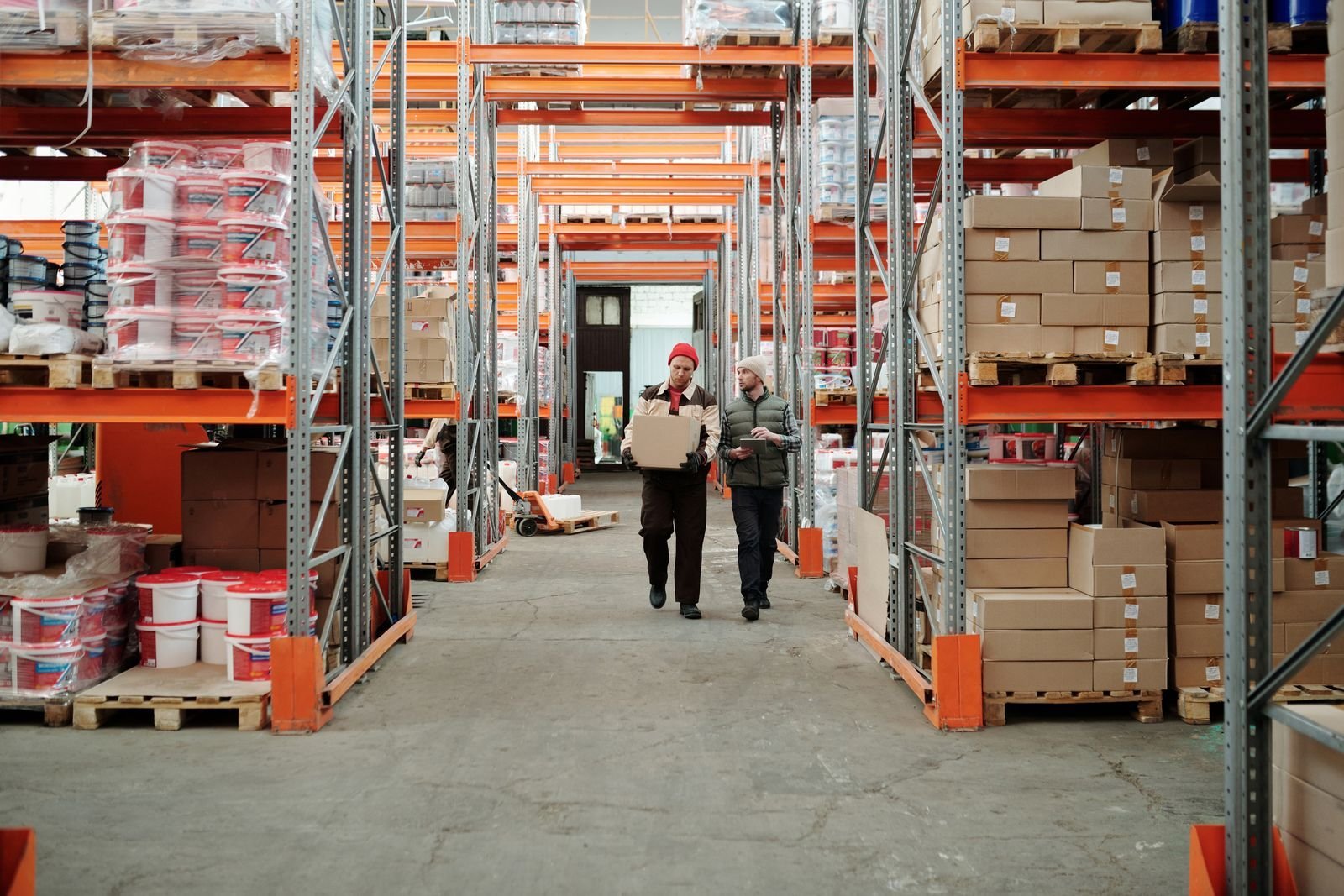
Corrugated boxes arrive flat and bundled, which keeps them compact. Store bundles flat on pallets or shelves, off the floor and away from doors, windows and moisture sources, because corrugated board absorbs humidity and can lose a meaningful part of its stacking strength in damp conditions. Avoid placing heavy items on top of flat bundles for long periods, which can crush the flutes before the boxes are even used. Rotate stock so older cartons are used first. At the packing station, fold boxes along the scored lines and seal them according to the style: tape for slotted cartons, tabs for self-locking mailers.
Corrugated Boxes Compared With Other Packaging
Paperboard cartons are thinner and print beautifully but are designed for retail shelves rather than shipping, so they are often packed inside a corrugated outer. Rigid boxes deliver a luxury feel for gifts and premium goods but are heavier and more costly to ship. Poly mailers are light but offer almost no crush protection. Corrugated boxes sit in the middle: strong enough for transit, light enough to keep shipping costs reasonable, printable enough to carry a brand, and widely recyclable. For many businesses the best solution combines materials, such as a printed corrugated mailer containing a paperboard product carton.
How to Order Custom Corrugated Boxes
Ordering is straightforward. Share your product dimensions, weight, approximate quantity and how the boxes will be shipped or displayed. Our team recommends a style, flute and board grade and prepares a free 3D mockup and dieline. You supply artwork or let our designers create it from your logo and brand colors. After you approve the proof, we move into production with checks on printing, cutting and gluing, then ship the finished boxes flat to your warehouse, fulfillment center or storefront anywhere in the country.
Ordering Custom Corrugated Boxes Across the USA
PackagingAazz is located at 1835 W 82nd St, Los Angeles, CA 90047, and supplies custom corrugated boxes to businesses in all 50 states. Call 31202340234 or email info@packagingaazz.com to request a free quote, structural advice or a 3D mockup. Our team is available 24 hours a day, 7 days a week.
WHAT WE MAKE
Corrugated Box Styles We Make
Each corrugated style below is built to your inside dimensions in the flute and wall construction your shipment needs, plain or fully printed.
Corrugated Mailer Boxes
Roll end tuck front mailers in E or B-flute that close without tape and give online orders a branded unboxing.
Regular Slotted Shipping Cartons
Standard RSC cartons with equal flaps, the efficient everyday choice for warehouse and parcel shipping.
Double Wall Corrugated Boxes
Two fluted layers for heavy, fragile or high-value goods that travel long distances or stack high.
Triple Wall Corrugated Containers
Industrial-strength containers for machinery parts, bulk materials and pallet-sized loads.
Printed Corrugated Boxes
Full-color litho-laminated or digitally printed cartons that turn a shipper into a brand billboard.
Kraft Corrugated Boxes
Natural brown liners with one or two-color printing for an honest, eco-minded look.
White Corrugated Boxes
White top liners that make logos and colors pop on mailers and retail-ready cases.
Corrugated Subscription Boxes
Repeatable mailer designs sized for monthly kits, with optional inside printing and inserts.
Corrugated Display Boxes
Shelf-ready trays and counter displays with tear-away panels that move straight from case to shelf.
Corrugated Boxes with Dividers
Cartons with partitions that keep bottles, jars and glassware separated during transit.
Corrugated Pizza Boxes
Food-safe B or E-flute pizza boxes that hold heat, resist grease and stack neatly for delivery.
Telescope Corrugated Boxes
Separate top and bottom pieces that slide together for apparel, framed art and gift sets.
Five Panel Folder Boxes
Wrap-style corrugated folders for long, flat or slim products such as rods, posters and panels.
Corrugated Boxes with Handles
Cartons with die-cut hand holes or attached handles for heavy cases and carry-out orders.
Self-Sealing Corrugated Mailers
Peel-and-seal adhesive strips with tear-open zippers that speed packing and simplify returns.
Corrugated Wine Shippers
Protective shippers with partitions or inserts for single bottles and multi-bottle wine orders.
Corrugated Moving Boxes
Branded boxes in standard moving sizes with printed handling marks and room labels.
Corrugated Master Cases
Outer cases that hold multiple retail cartons for distribution to stores and fulfillment centers.
Corrugated Produce Boxes
Vented, moisture-resistant boxes for fruit, vegetables and other fresh farm products.
PACKAGING EXPERTS. CAREFUL WORK.
Corrugated Boxes Engineered for the Journey
Specified for real shipping conditions. We match flute, wall construction and board grade to your product weight, fragility, stacking height and shipping method, so boxes protect what is inside without adding unnecessary bulk or cost.
Strong boxes that still look good. From one-color flexo logos to litho-laminated full-color mailers and inside printing, we help your corrugated packaging carry your brand all the way to the customer’s door.
Dielines & 3D mockups
No die & plate charges
Short runs welcome
All 50 states
WHAT'S INCLUDED
What's Included With Every Custom Corrugated Boxes Order
Product Measurement
We confirm the exact inside dimensions your product needs before recommending a structure.
Dieline & Structure
Custom dielines, inserts and closures planned so every box folds, locks and fits properly.
Free 3D Mockup
See your artwork on the real box shape and request changes before anything is printed.
Expert Printing
Offset, digital or flexo printing matched to your quantity, material and brand colors.
Quality Checks
Every run is checked for color, cutting, gluing and finishing before it is packed.
Flat-Pack Delivery
Boxes ship flat to save space and freight, to any address in the USA.
MATERIALS & FINISHES
Materials & Finishes for Custom Corrugated Boxes
SBS Paperboard
Bright white, smooth board from 14 to 24 point that gives the sharpest print and most vibrant color for retail cartons.
Kraft Paperboard
Natural brown, strong and recyclable board for eco-friendly, organic and artisan brands, printable with white ink.
Corrugated Board
E-flute and B-flute board with excellent crush and stacking strength for mailers, shippers and heavier products.
Rigid Chipboard
Thick 1 to 3 mm board wrapped in printed or textured paper for luxury, gift and presentation boxes.
Gloss & Matte Lamination
Protective films that make colors vivid with gloss or modern and low-glare with matte, while resisting scuffs.
Soft-Touch Finish
A velvety lamination that feels premium in the hand and resists fingerprints on dark designs.
Foil Stamping & Spot UV
Metallic gold, silver or holographic foil and glossy spot UV highlights for logos and key details.
Embossing & Debossing
Raised or pressed logos and patterns that add a tactile, crafted feel to any box style.
HOW IT WORKS
Order Custom Corrugated Boxes in 4 Simple Steps
1. Share Your Details
Send box style, size, quantity and artwork ideas by form or call 31202340234.
2. Free Design & Mockup
Our designers prepare the dieline and a 3D proof for your approval.
3. Clear Quotation
You get a written quote with material, print, finish and timeline.
4. Print & Deliver
We print, finish, inspect and ship your boxes anywhere in the USA.
FREQUENTLY ASKED QUESTIONS
Custom Corrugated Boxes FAQs
Which flute should I choose for my corrugated box?
E-flute suits printed mailers and lighter retail items, B-flute adds puncture resistance, and C-flute is the standard for general shipping cartons. We recommend the best fit for your product.
When do I need double wall corrugated boxes?
Double wall boxes are recommended for heavy, fragile or high-value goods, long-distance freight, export shipments and cartons that will be stacked high on pallets.
What is the difference between ECT and burst strength?
ECT measures how much edge pressure board can take, which relates to stacking. Burst strength measures resistance to punctures and rough handling on the box faces.
Can you print full color on corrugated boxes?
Yes. We offer flexo printing for simple logos, digital printing for short runs and litho lamination for photographic, full-color graphics on mailers and displays.
Can corrugated mailers be printed on the inside?
Yes. Inside printing is a popular way to add messages, patterns or instructions that customers see when they open the box.
How do I measure for a custom corrugated box?
Corrugated boxes are sized by inside length, width and depth. Measure your packed product and allow a little room for inserts or padding.
Are corrugated boxes recyclable?
Yes. Corrugated board is widely recycled in the USA. Paper tape, water-based inks and paper inserts help keep boxes easy to recycle.
Can you make corrugated boxes with inserts or dividers?
Yes. We design corrugated partitions, die-cut inserts and pads together with the outer box so products stay secure during transit.
What is the minimum order for custom corrugated boxes?
Minimums are low, and digital printing makes small runs and test batches practical for new products and growing brands.
Do you ship corrugated boxes nationwide?
Yes. Finished corrugated boxes are shipped flat to warehouses, fulfillment centers and stores in all 50 states.
GET STARTED
Free Quote for Custom Corrugated Boxes
Tell us your box style, size, quantity and finish. We reply with a clear written quote and a free design mockup. No obligations, no cost.
Contact PackagingAazz
Talk to a packaging specialist about sizes, materials, printing and pricing.
- Call: 31202340234
- info@packagingaazz.com
- 1835 W 82nd St, Los Angeles, CA 90047
- Free design & written quote
- Shipping to all 50 states
EXPLORE MORE
Related Packaging Services
Custom Cardboard Boxes
Light, printable paperboard cartons
Custom Kraft Boxes
Natural, recyclable kraft packaging
Custom Paperboard Boxes
Crisp retail cartons in SBS & CRB
Custom Printed Boxes
Full-color printing inside & out