
PackagingAazz provides custom die-cut finishing that shapes your packaging precisely, from unique box outlines and windows to hang tabs, handles and fitted inserts, with no die charges added to your order.
Clean edges and accurate creases
Custom shapes without tooling fees
Dielines and 3D mockups included
Die-cutting is the finishing step that turns a printed flat sheet into the exact shape of your box. A cutting die, made of sharp steel rules set into a board, cuts the outline while creasing rules press fold lines into the material. Custom die-cut finishing goes beyond standard rectangles: it creates shaped windows, curved edges, display cutouts, hang holes, handles, interlocking tabs, perforations and inserts that hold products securely.
PackagingAazz designs your dieline, checks it against your product, and sends a free 3D mockup before production. We cut paperboard, corrugated, kraft and rigid wraps, with typical production of about 8-12 business days, low minimums, no die or plate charges and shipping from Los Angeles to all 50 states.
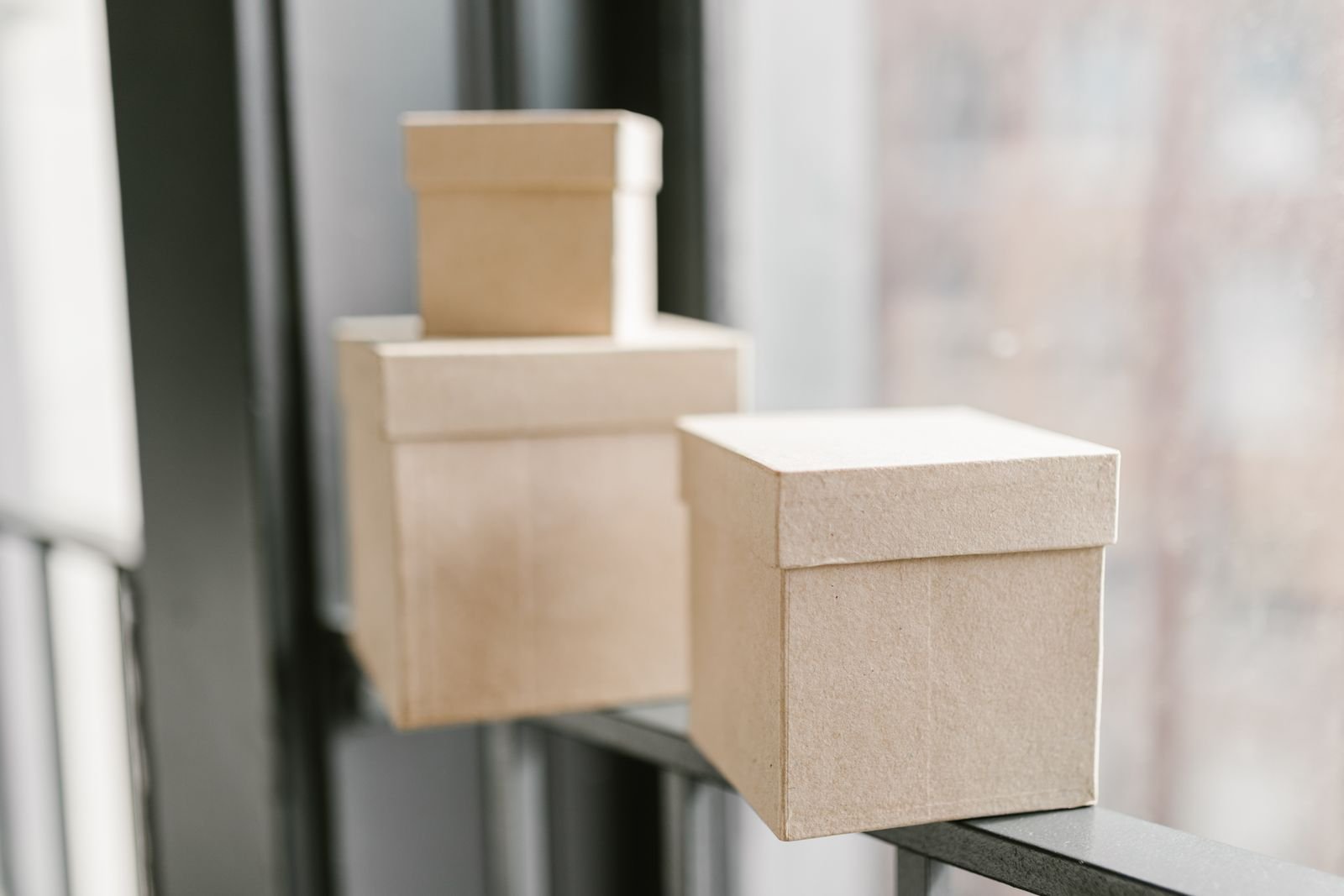
Die-cutting is where packaging takes shape. Print and finishes give a box its look, but the die-cut defines its structure, how it opens, how it displays the product and how it protects it. This guide explains how die-cutting works, the features it can create, how to design for it and how to avoid mistakes that cause delays.
A cutting die is a flat or rotary tool. Flat dies are built on a sturdy base board with slots laser-cut into it; steel cutting rules and blunter creasing rules are bent to shape and fitted into those slots. Rubber ejection strips are added beside the rules to push the material free after each cut. The printed sheet is placed in a die-cutting press, which presses the die into the sheet with high force, cutting the outline and creasing fold lines in one stroke.
| Line type | Purpose | Typical appearance on dieline |
|---|---|---|
| Cut line | Separates material completely | Solid line |
| Crease line | Creates a fold | Dashed line |
| Perforation | Tear-off or easy-open feature | Dotted or dash-dot line |
| Partial cut (kiss cut) | Cuts only top layer | Labelled separately |
| Bleed line | Shows artwork extension beyond cut | Offset outline |
| Glue area | Indicates where adhesive goes | Shaded or labelled zone |
Each supplier uses its own colour and style conventions, so always use the dieline provided for your specific job.
Hexagonal boxes, pillow boxes, gable boxes with handles, curved-edge sleeves and product-shaped cartons all depend on custom dies. A distinctive silhouette can make a product recognisable even before the logo is read.
Die-cut windows show the product inside. They can be simple rectangles, circles or shaped outlines that echo the product or logo, and may be left open or covered with clear film through window patching.
Hang tabs with euro-slot or round holes, tear-away display fronts, built-in easels and counter display trays are all formed by die-cutting.
Die-cut inserts hold products in place, separate items in gift sets and prevent movement during shipping. Paperboard and corrugated inserts can replace foam in many applications.
Thumb notches, tuck slots, locking tabs, tear strips, handle cutouts and air vents are small die-cut features that improve usability.
| Method | How it works | Strengths | Best for |
|---|---|---|---|
| Flatbed die-cutting | Flat steel rule die pressed into sheets | Precise, versatile, handles thick board | Folding cartons, corrugated, rigid wraps |
| Rotary die-cutting | Cylindrical die on a rotating press | Very fast on long runs | High-volume corrugated and labels |
| Digital blade cutting | Software-guided blade and creasing tool | No tooling, ideal for prototypes | Samples, very short runs |
| Laser cutting | Focused laser beam | Extremely fine detail | Intricate patterns, specialty projects |
We choose the method based on your quantity, material and design. Prototypes are often digitally cut so you can test fit before production dies are made.
Hang tabs, windows and shelf-ready trays help products display well. A tear-away front can turn a shipper into a counter display in seconds.
Die-cut inserts hold bottles and jars upright. Shaped windows can reveal product colours while protecting the container.
Gable boxes with handle cutouts, cupcake inserts with round holes and windowed pastry boxes rely on die-cutting. For direct food contact, use appropriate food-safe materials and check requirements with your advisor.
Mailer boxes with locking tabs, tear strips for easy opening and inserts that keep items in place reduce damage and improve unboxing.
Precision inserts cradle devices, chargers and cables, with thumb notches to help customers lift items out.
Shaped cutouts can let shoppers smell or see the candle, while inserts stop jars rattling in transit.
| Problem | Cause | Prevention |
|---|---|---|
| Cracking on folds | Wrong crease depth or grain direction | Correct crease rules and grain layout |
| Print and cut misalignment | Normal registration tolerance | Bleed, safe zones and careful make-ready |
| Rough or fuzzy edges | Dull rules or wrong pressure | Regular rule checks and press adjustment |
| Incomplete cuts | Uneven pressure | Make-ready and sample inspection |
| Torn narrow sections | Bridges too thin for material | Structural review of dieline |
| Nicks visible on edges | Small tabs holding sheet together | Planned nick placement in hidden areas |
Die-cut packaging costs depend on material, sheet size, the number of boxes that fit on each sheet, complexity of the shape, number of windows or features, gluing requirements and quantity. Efficient layouts that fit more blanks per sheet reduce waste and cost. While many suppliers charge separately for custom dies, PackagingAazz does not charge die or plate fees, which makes custom shapes more accessible for smaller orders. We can also suggest small structural tweaks that lower cost without changing the look.
Smart die-cutting supports sustainability. Right-sized dielines use less material, efficient sheet layouts reduce waste, and die-cut paperboard inserts can replace plastic or foam. Interlocking tabs can reduce the need for tape or glue. Trim waste from die-cutting is typically collected for recycling at the factory. If you plan to make environmental claims, check wording with your advisor because requirements vary by state.
Yes. We review supplied dielines for material thickness, fold allowances and glue areas. If adjustments are needed, we explain them before production so the box assembles properly.
It depends on the material and window shape. Very small or intricate windows may tear or weaken a panel. Our structural team will advise on practical minimum sizes and spacing from edges and folds.
Large windows or cutouts remove material and can reduce strength. We compensate with suitable board thickness, careful placement and, where needed, reinforcing features or film patching.
Yes. Foil, embossing, raised UV and lamination are applied before die-cutting. We keep finishes clear of cut and crease lines to avoid cracking or misalignment.
For complex shapes or new structures, ask about a prototype. Digital cutting lets us produce samples without making a production die.
Small cutting errors become big problems at scale. A crease a fraction too shallow can make a box spring open; a misplaced cut can leave a white sliver on a coloured edge; a slightly loose insert can let a glass bottle move and break. That is why we check structural drawings carefully, test samples and inspect throughout production. The goal is packaging that assembles smoothly on your packing line, looks sharp on the shelf and protects your product all the way to the customer.
Our team handles structural design, printing, finishing and die-cutting together, so every element is planned to work with the others. You get free structural and graphic design support, free 3D mockups, no die or plate charges, low minimums and nationwide shipping from Los Angeles. Send us your product and idea, even if it is just a sketch, and we will turn it into a precise, production-ready dieline.
Inserts are one of the most valuable uses of die-cutting, yet they are often designed last. A well-planned insert keeps products from moving, presents them attractively and makes packing faster for your team.
Measure every item precisely, including caps, pumps, handles and any protruding parts. Note weight and fragility. Products with irregular shapes may need a cradle or shaped cavity rather than a simple hole.
Holes and cavities need a little clearance so products slide in easily but do not rattle. Too tight and packing slows down or the insert tears; too loose and items move in transit. Prototypes are the best way to confirm the balance.
Add thumb notches, ribbon pulls or lift tabs so customers can remove products without frustration. A beautiful insert that traps the product leaves a poor impression.
Retailers value packaging that goes from delivery to shelf quickly. Die-cutting enables shelf-ready designs such as:
Each retailer may have its own requirements for shelf-ready packaging, so share any guidelines you have received and we will design around them.
Perforations are partial cuts that let material tear along a controlled line. They are used for tear strips on mailers, tear-away display panels, detachable coupons and easy-open dispensers. The balance between cut and uncut segments matters: too strong and customers struggle to open the box; too weak and it may tear during shipping. Our engineers set perforation patterns based on the material and purpose, and we test samples to confirm they open cleanly.
Good structural design saves time on your packing line. Auto-bottom boxes that snap into shape, inserts that drop in without fiddling and lock tabs that close securely without tape all reduce handling. When briefing a project, tell us how many units you pack per day and whether boxes are assembled by hand or machine. We can then suggest structures that suit your workflow, not just your product.
Shape affects shipping. Unusual outlines can leave empty space in outer cartons and raise freight costs. Boxes that ship flat and assemble on site save storage space. When designing custom shapes for e-commerce, consider how the box fits inside a mailer or shipper and whether dimensional weight pricing from carriers could increase costs. We can suggest shape adjustments that keep the visual impact while packing more efficiently.
| Factor | Standard structure | Custom die-cut structure |
|---|---|---|
| Design time | Short, proven template | Longer, requires engineering |
| Brand distinctiveness | Familiar look | Unique silhouette and features |
| Product fit | Sized to product | Shaped precisely around product |
| Prototype recommended | Sometimes | Usually |
| Tooling fees at PackagingAazz | None | None |
Because we do not charge die or plate fees, the main differences come down to design time and material use rather than tooling cost, which makes custom structures a realistic option for growing brands.
Share your product dimensions, quantities and any reference images or sketches. Tell us how the box will be sold, shipped and displayed. Our team will propose a structure, build your dieline, apply your artwork in a free 3D mockup and guide you through approval, with production typically taking about 8-12 business days afterward. Request a quote to start your custom die-cut project.
Die-cutting is not only for boxes. Shaped product labels, swing tags with custom outlines, thank-you cards with rounded corners and die-cut stickers all help extend your brand across every touchpoint. Matching the shape language across boxes, labels and cards, for example using the same rounded corner radius or an arch motif, creates a cohesive look that customers notice.
We keep your approved dielines on file so reorders match exactly. If you update a product size or add a feature such as a window or hang tab, we revise the dieline, send a new mockup and confirm changes before production. Because we do not charge die fees, updating a structure to fit a reformulated product or new bottle is straightforward.
The board you choose affects how cleanly shapes cut and how well creases fold. Each material behaves a little differently under the die.
| Board | Cutting behaviour | Good for |
|---|---|---|
| SBS paperboard | Very clean edges, sharp detail | Cosmetic cartons, intricate windows |
| Recycled boxboard | Clean cuts, grey or brown core | Everyday retail cartons |
| Kraft board | Strong folds, fibrous edges | Eco and food packaging |
| E-flute corrugated | Good detail for corrugated | Mailers and printed shippers |
| B-flute corrugated | Less fine detail, more strength | Heavier shippers and displays |
When a design needs both intricate cutouts and strength, we may suggest a stronger board with simplified detail, or a two-part structure where a fine outer sleeve sits over a sturdier inner box.
A die-cut window can be left open or patched with clear film on the inside of the panel. Open windows are simpler and fully paper-based, while patched windows protect the product from dust and handling and keep small items from falling out. Patched windows need a clean glue margin around the opening, which we build into the dieline. Our team will help you decide which option suits your product and sustainability goals.
Brands with several products can save time by designing a family of dielines that share proportions, closure styles and window shapes. Products then look consistent on shelf, packing teams learn one assembly method, and artwork templates can be reused with small changes. We can map your range and suggest a set of structures that cover different sizes while keeping a unified look.
Many of our best die-cut projects begin with a rough idea: a photo of a box a client admired, a hand-drawn sketch or simply a description of how the packaging should open. Our structural team translates that idea into a working dieline, tests it digitally, and refines details such as tuck lengths, lock tabs and insert cavities. Once the structure works, your artwork is applied and shown in a free 3D mockup so you can see every panel before approving. This collaborative approach means you do not need technical packaging knowledge to get a custom shape; you only need a clear picture of what you want customers to experience when they hold, open and use your box.
If you are unsure where to begin, send us your product and a few examples of packaging you like. We will suggest a few structural directions and explain the trade-offs in cost, strength and appearance for each.
Our die-cut finishing covers a wide range of shapes and functions.
Unique outlines
Product visibility
Peg display
Secure fit
Easy opening
Every die-cut job is checked for cut accuracy, crease quality and registration between print and cut. We fold test samples to confirm boxes assemble cleanly without cracking, and inspect for nicks, burrs and incomplete cuts.
Dielines & 3D mockups
No die & plate charges
Short runs welcome
All 50 states
We confirm the exact inside dimensions your product needs before recommending a structure.
Custom dielines, inserts and closures planned so every box folds, locks and fits properly.
See your artwork on the real box shape and request changes before anything is printed.
Offset, digital or flexo printing matched to your quantity, material and brand colors.
Every run is checked for color, cutting, gluing and finishing before it is packed.
Boxes ship flat to save space and freight, to any address in the USA.
Bright white, smooth board from 14 to 24 point that gives the sharpest print and most vibrant color for retail cartons.
Natural brown, strong and recyclable board for eco-friendly, organic and artisan brands, printable with white ink.
E-flute and B-flute board with excellent crush and stacking strength for mailers, shippers and heavier products.
Thick 1 to 3 mm board wrapped in printed or textured paper for luxury, gift and presentation boxes.
Protective films that make colors vivid with gloss or modern and low-glare with matte, while resisting scuffs.
A velvety lamination that feels premium in the hand and resists fingerprints on dark designs.
Metallic gold, silver or holographic foil and glossy spot UV highlights for logos and key details.
Raised or pressed logos and patterns that add a tactile, crafted feel to any box style.
Send box style, size, quantity and artwork ideas by form or call +1 (213) 597-4368.
Our designers prepare the dieline and a 3D proof for your approval.
You get a written quote with material, print, finish and timeline.
We print, finish, inspect and ship your boxes anywhere in the USA.
It is the process of cutting and creasing printed sheets into precise shapes using a custom die, forming boxes, windows, inserts and other features.
No. PackagingAazz does not charge separate die or plate fees, even for custom shapes.
Yes, within the limits of the material and folding. Our structural team checks that complex shapes are cuttable, foldable and strong enough.
Die-cutting uses a steel rule die for fast, repeatable production. Digital cutting uses a blade or laser guided by software, useful for samples and very short runs.
It is very precise, but there is always a small tolerance between print and cut, so we add bleed and keep important artwork away from cut edges.
Tell us your box style, size, quantity and finish. We reply with a clear written quote and a free design mockup. No obligations, no cost.
"*" indicates required fields
Talk to a packaging specialist about sizes, materials, printing and pricing.
Printed gifts
Gift boxes
Rigid printing
Inside printing
Share your box style, size and quantity. A packaging specialist sends a written quote and a free 3D mockup.
Takes less than a minute.