
PackagingAazz offers window patching services that add clear film windows to your boxes, letting customers see the product while it stays protected, clean and secure inside branded packaging.
Show colour, texture and quality
Any outline we can die-cut
Preview window placement
Window patching is the process of gluing a piece of clear film to the inside of a box panel over a die-cut opening. The result is a transparent window that shows the product while keeping out dust and fingers. It is widely used for bakery boxes, cosmetics, toys, soaps, apparel, candles, tea and gift sets, where seeing the product helps shoppers decide to buy.
PackagingAazz designs the window shape and position, sets up glue margins in the dieline and shows everything in a free 3D mockup. We patch folding cartons, sleeves and some corrugated styles, with no die or plate charges, low minimums, typical production of about 8-12 business days and shipping from Los Angeles to all 50 states.
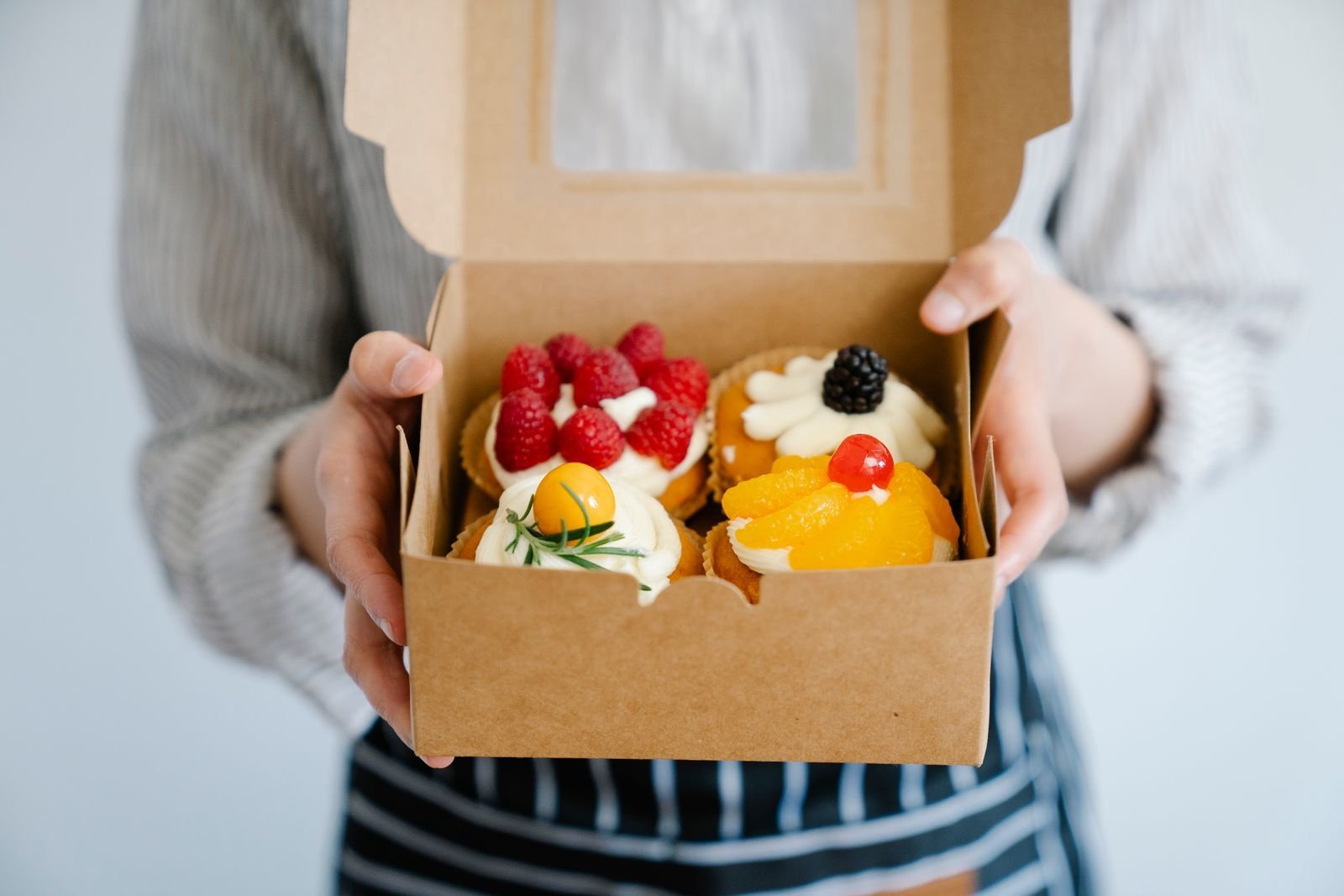
Seeing is believing. A clear window lets shoppers check colour, texture, freshness and quality without opening the box, which builds confidence and reduces returns. This guide explains how window patching works, which films and box styles to choose, how to design windows that look good and stay strong, and what to avoid.
Because the film sits on the inside of the panel, the outside surface stays clean and printed, and the film edges are hidden from view.
| Factor | Open window (no film) | Patched window (with film) |
|---|---|---|
| Product protection | Product exposed to touch and dust | Product sealed behind film |
| Materials | Board only | Board plus film |
| Small items | May fall out | Kept inside |
| Hygiene | Lower | Higher |
| Recycling | Simpler | Depends on local programs |
| Best for | Large items, textiles, eco-focused designs | Food, cosmetics, small parts, gift sets |
A widely used clear film known for good clarity and stiffness. It resists wrinkling and works on many box styles.
Historically common, though many brands now choose alternatives. Ask our team about current options if you have an existing PVC specification.
Flexible and clear, often used where some give is helpful.
Films made from renewable sources, such as cellulose or PLA-based materials, are available for some projects. Performance, clarity and end-of-life options vary, so discuss your goals and check any claims with your advisor.
For chilled foods or products that release moisture, anti-fog films help keep the window clear. Availability depends on box style and quantity.
Customers want to see what they are buying. A patched window shows freshness and decoration while keeping food covered. For direct food contact, confirm material requirements with your supplier and advisor.
Soap bars, bath bombs, lip products and makeup palettes look appealing behind a clear window, especially when colours are the selling point.
Windows let children and parents see toys while preventing small parts from being lost.
Socks, ties, scarves and jewelry show fabric patterns and colours through a window.
Loose-leaf tea, pasta, dried fruit and snacks can be displayed in inner bags or pouches visible through a carton window.
A window shows candle colour, wax texture and vessel design while protecting the surface.
A window should frame the most attractive part of the product. Too small and it fails to show enough; too large and the box loses strength and branding space. Consider where the product sits inside the box and whether it might shift. Inserts can hold items in position so the right part always appears in the window.
Rectangles and circles are simple and efficient, but shaped windows can become a signature design element. A window shaped like a leaf for a botanical brand, a heart for a gift box or the outline of the product itself makes the packaging memorable.
Film needs board around the opening to bond to. Leave enough space between the window and any fold, edge or other cutout. Our dieline includes the required margin, and we keep varnish or lamination away from glue zones where needed so the adhesive bonds well.
Use the frame around the window to reinforce your brand. Printed borders, foil outlines or a short message beside the window draw attention to what customers can see inside.
When a window shows the inside of a box, consider printing the interior or using an insert with colour or pattern. This makes the view through the window look intentional rather than showing plain board.
Window patching adds a film material and an extra machine step, so windowed boxes typically cost a little more than plain boxes of the same size. Pricing depends on box size, quantity, film type and thickness, window size, the number of windows and any premium finishes. Multiple windows or unusual shapes can add complexity. PackagingAazz does not charge die or plate fees, so custom window shapes do not carry separate tooling costs. Ask for a quote with your box size and window idea, and we will explain the options.
| Problem | Likely cause | Prevention |
|---|---|---|
| Wrinkled film | Thin film or poor tension | Suitable film thickness and machine setup |
| Film peeling away | Coating on glue area or insufficient glue | Clear glue margins and correct adhesive |
| Glue visible through window | Excess adhesive | Controlled glue application |
| Window torn at corners | Sharp corners or narrow board | Rounded corners and adequate margins |
| Product shifts out of view | No insert | Inserts or structural support |
| Fogged window | Moisture from product | Anti-fog film or ventilation |
Windows add a second material to paperboard packaging, which can complicate recycling in some areas. Ways to reduce the impact include:
Recycling and composting rules vary by location. Check with your advisor before printing environmental claims on windowed packaging.
Yes. Foil, embossing, spot UV, raised UV and soft-touch can all be used on windowed boxes. We keep finishes clear of the glue margin so the film bonds securely, and avoid placing raised effects right at the window edge.
Windows can cover a large part of a panel, but bigger openings reduce box strength. For large windows, we may suggest a thicker board, a supportive insert or a wraparound design that carries strength through the corners.
Yes, wraparound windows span two panels, such as the front and top. They need careful structural design so the film folds cleanly with the box. Not every box style supports them, so ask our team.
Select corrugated styles, especially fine-flute mailers and retail boxes, can be patched. Feasibility depends on flute size and box design.
Clear films can pick up light scratches with heavy handling. Choosing a suitable film thickness and protective outer packaging for shipping helps keep windows clear.
| Product | Window idea |
|---|---|
| Cupcakes or cookies | Large top window with a printed frame |
| Handmade soap | Small window showing texture and colour |
| Socks or ties | Shaped window revealing pattern |
| Lip or makeup sets | Multiple small windows, one per shade |
| Candles | Front window showing vessel and wax colour |
| Toys | Wraparound window for a full view |
| Loose tea | Window over an inner bag to show leaves |
Windows help products communicate quickly on a crowded shelf. Shoppers can check colour or size, see that the product matches the picture and feel more confident about buying. For gifting, windows let recipients glimpse what is inside before opening. In e-commerce, windows matter less in the shipper but can make the retail box inside feel more transparent and premium during unboxing.
A window is only as good as the view it frames. If the product slides to one corner or tips over, customers see empty space or the wrong side of the item. Inserts solve this by holding products in a fixed position behind the window.
When planning, measure your product precisely and tell us which face should appear in the window. We align insert cavities and window openings on the dieline so they line up correctly when the box is assembled.
Windowed boxes are a mainstay for bakeries, cafés and specialty food brands. A few practical points help them perform well:
Some products benefit from more than one window: a set of lip colours, a trio of candles or a collection of tea samples. Multiple windows can each frame a single item, making the box feel organised and premium. The board between windows must be wide enough to stay strong and provide glue margins, so our team plans spacing carefully. In some cases, one larger window with a printed overlay or insert dividers creates a similar effect more simply.
A windowed sleeve over an inner box or tray is an elegant way to combine visibility with structure. The sleeve carries branding and the window, while the inner tray holds the product. Customers slide off the sleeve to reveal the full product, adding a small moment to the unboxing. This approach also allows one inner tray to be used across a range, with different printed sleeves for each variant.
| Option | Visibility | Protection | Notes |
|---|---|---|---|
| Patched window carton | Partial, framed | Good | Balance of branding and view |
| Open window carton | Partial, direct | Moderate | Paper-only, touchable product |
| Fully printed carton with photo | Image only | Good | Maximum branding space, no real view |
| Clear plastic box | Full | Good | Less branding area, different material profile |
| Windowed sleeve over tray | Partial | Good | Flexible across product variants |
Tell us about your product and how you want customers to see it. Our team will design the window, plan inserts and glue margins, recommend a film and send a free 3D mockup. With no die or plate charges, low minimums, production in about 8-12 business days after approval and shipping to all 50 states, PackagingAazz makes windowed packaging simple. Request a quote today.
Clear films reflect light, which can create glare in photos. Shoot at a slight angle to the window, use diffused lighting and avoid placing bright lights directly in front of the box. A polarising filter can reduce reflections. Show both the closed box, with the product visible through the window, and the open box, so online shoppers understand exactly what they will receive.
A window can tell part of your brand story. A window shaped like a sun for a summer collection, a bottle silhouette for a beverage gift set or a keyhole for a mystery box adds personality and invites curiosity. Shaped windows work best when they are bold and simple, with enough board around them to stay strong. Our team can test several shapes in the 3D mockup so you can compare options before deciding.
We keep your approved dieline, film specification and window placement on file, so reorders match the original run. If you change product size or packaging inserts, let us know so we can confirm the window still frames the product correctly before printing.
Holiday and gift packaging often relies on windows to show festive products such as cookies, ornaments, candles and treat assortments. A seasonal approach that works well is to keep a standard windowed box structure year-round and change only the printed design around the window. This keeps costs predictable, simplifies storage and lets you respond quickly to each season. For gift sets, a window that reveals the arrangement of items inside makes the set look complete and generous.
Film thickness affects how the window looks and behaves. Thinner films are lighter and use less material but may wrinkle or flex more easily on larger windows. Thicker films stay flatter and resist dents, which helps on large display windows or boxes that are handled frequently. The right choice depends on window size, box style and how the packaging will be used. Our team recommends a thickness for your project and can show the difference on samples if needed.
Packaging must still communicate brand name, product name, key benefits and required details. A window takes space away from printing, so plan the panel layout early. Many effective designs put the brand name above the window, the product name or variant beside or below it, and secondary information on side and back panels. This keeps the window as the hero while making sure shoppers can still read what they need.
Peg-hung products such as accessories, small electronics and toys often combine a hang tab with a front window. The tab supports the weight while the window shows the item. Because hanging boxes carry load at the top, we reinforce the tab area and position the window so it does not weaken the panel below the hanging point. For counter displays, windows on individual units can be paired with a printed display tray for a cohesive shelf presence.
Store flat windowed blanks or assembled boxes in a cool, dry place out of direct sunlight. Heat can affect film flatness and adhesive, while humidity can soften board. When stacking assembled boxes, avoid pressing directly on window areas. Packing teams should handle boxes by the edges to avoid fingerprints and scratches on the film.
Windows are not the best choice for every product. They work best when the product itself is attractive, colourful or textured, when customers need to confirm size or colour before buying, or when freshness and quality are part of the appeal. They are less suitable for light-sensitive products, items that look unappealing outside their final use, or packaging where maximum printed space is needed for detailed instructions. If you are undecided, our team can mock up the same box with and without a window so you can compare them side by side before choosing.
For light-sensitive products, consider a smaller window, a window over an inner protective container or a high-quality printed image instead. Requirements vary by product, so check with your advisor when product stability or labeling rules apply.
Window patching can be configured in several ways to suit your product.
Front display
Two-panel view
Logo or product outline
Show each item
Material alternative
We check every patched window for film placement, glue coverage, clarity and wrinkles. Sample boxes are folded and inspected to confirm the film stays flat, bonded and clear through assembly.
Dielines & 3D mockups
No die & plate charges
Short runs welcome
All 50 states
We confirm the exact inside dimensions your product needs before recommending a structure.
Custom dielines, inserts and closures planned so every box folds, locks and fits properly.
See your artwork on the real box shape and request changes before anything is printed.
Offset, digital or flexo printing matched to your quantity, material and brand colors.
Every run is checked for color, cutting, gluing and finishing before it is packed.
Boxes ship flat to save space and freight, to any address in the USA.
Bright white, smooth board from 14 to 24 point that gives the sharpest print and most vibrant color for retail cartons.
Natural brown, strong and recyclable board for eco-friendly, organic and artisan brands, printable with white ink.
E-flute and B-flute board with excellent crush and stacking strength for mailers, shippers and heavier products.
Thick 1 to 3 mm board wrapped in printed or textured paper for luxury, gift and presentation boxes.
Protective films that make colors vivid with gloss or modern and low-glare with matte, while resisting scuffs.
A velvety lamination that feels premium in the hand and resists fingerprints on dark designs.
Metallic gold, silver or holographic foil and glossy spot UV highlights for logos and key details.
Raised or pressed logos and patterns that add a tactile, crafted feel to any box style.
Send box style, size, quantity and artwork ideas by form or call +1 (213) 597-4368.
Our designers prepare the dieline and a 3D proof for your approval.
You get a written quote with material, print, finish and timeline.
We print, finish, inspect and ship your boxes anywhere in the USA.
It is gluing clear film behind a die-cut opening in a box so customers can see the product while it remains protected.
Common choices include clear plastic films such as PET, with plant-based film alternatives available for some projects. We recommend the best option for your box and product.
Most shapes that can be die-cut can be patched, as long as there is enough board around the opening for glue and strength.
It depends on the film, adhesive and how the food contacts it. Requirements vary, so confirm with your supplier and advisor for direct food contact.
Mixing film with paperboard can affect recycling depending on local programs. Open windows or plant-based films are options to discuss.
Tell us your box style, size, quantity and finish. We reply with a clear written quote and a free design mockup. No obligations, no cost.
"*" indicates required fields
Talk to a packaging specialist about sizes, materials, printing and pricing.
Printed gifts
Gift boxes
Rigid printing
Inside printing
Share your box style, size and quantity. A packaging specialist sends a written quote and a free 3D mockup.
Takes less than a minute.